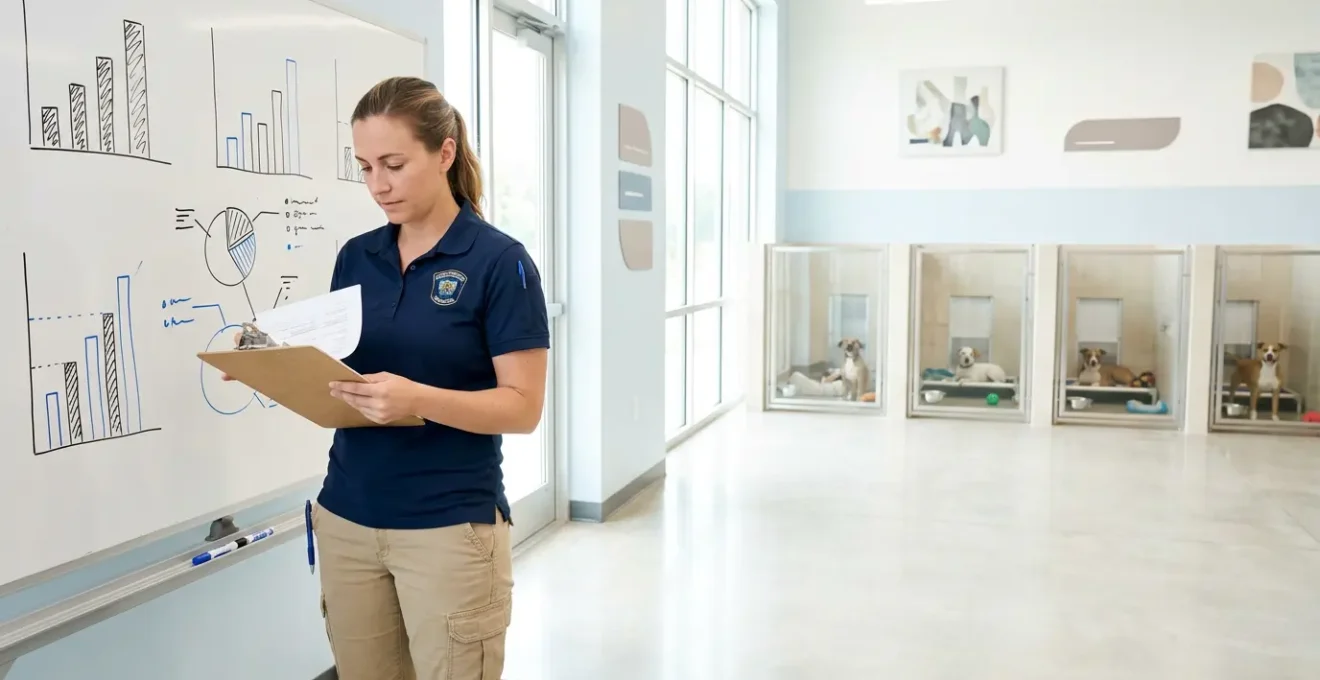
The difference between a true rescue and a retail scam isn’t the adoption fee—it’s their operational transparency and lifecycle commitment to the animal.
- Ethical rescues provide a verifiable medical ledger and have clear biosecurity protocols.
- Fraudulent operations often use high-pressure tactics and lack a non-negotiable “take back” policy.
Recommendation: Audit before you adopt. Demand documentation, ask pointed questions about their foster and medical systems, and trust verifiable actions over emotional stories.
The desire to save an animal is a powerful, noble impulse. But in a world where heart-wrenching photos and viral videos can be fabricated, this impulse is being weaponized. You see a dog in desperate need, you want to help, and you find a group claiming to be its savior. The problem is, many well-intentioned adopters and donors are inadvertently funding “retail rescue” or “dog flipping” operations—for-profit businesses masquerading as charities, often with slick websites and high-pressure tactics.
The common advice—”check their 501(c)(3) status” or “avoid high adoption fees”—is dangerously simplistic. Scammers are sophisticated; they can obtain nonprofit status and justify high fees with sob stories about transport costs. To truly protect yourself and the animals you want to help, you must stop thinking like a hopeful adopter and start thinking like a charity investigator. Your goal is not to find red flags; it’s to audit the organization’s entire operational model for transparency and accountability.
This guide moves beyond surface-level checks. It provides an investigative framework to analyze a rescue’s medical, financial, and behavioral systems. You will learn to scrutinize their claims, demand the right documentation, and understand the systemic differences that separate a legitimate, life-saving organization from a fraudulent one that treats animals as mere commodities. This is about arming yourself with the knowledge to ensure your money and your home go to a cause that truly deserves it.
To help you navigate this complex landscape, this article provides a clear roadmap. We will dissect the key operational areas where ethical rescues shine and where scams reveal their true nature, giving you the tools to make a confident and responsible choice.
Summary: Distinguishing Ethical Rescues from Scams
- The High-Fee Puppy Import: Is It Rescue or Brokering?
- Did They Treat the Heartworm? Checking Veterinary Records Before Signing?
- Foster-Based Rescues: Why They Offer Better Behavioral Predictions?
- When “No Kill” Becomes “Slow Kill”: Recognizing Hoarding Rescues?
- The “Take Back” Clause: Why Ethical Rescues Must Offer It?
- Municipal Shelter vs. Private Rescue: Where Should You Adopt?
- Can You Carry Parvo Home to Your Dog on Your Shoes?
- How to Navigate Shelter Applications to Secure the Right Dog?
The High-Fee Puppy Import: Is It Rescue or Brokering?
The image is compelling: a puppy saved from a dire situation overseas, now looking for a loving home. Many organizations doing this work are legitimate, but this model is also ripe for exploitation by “retail rescue” groups. These groups often act as brokers, buying cheap puppies from foreign breeders or puppy mills, “laundering” them with a rescue story, and selling them for a hefty “adoption fee” that is pure profit. The fee, they’ll claim, covers transport and vetting, but the math often doesn’t add up, especially when documentation is vague or non-existent.
An ethical rescue, even one working internationally, operates with complete financial and logistical transparency. They should be able to provide a clear breakdown of costs and prove they are meeting stringent import requirements. The goal is rescue, not retail. While 4.2 million shelter animals were adopted in the US in a recent year, the pressure on local systems is immense. Legitimate international rescues often work in partnership with local shelters to alleviate this burden, rather than just adding more animals to the system for profit.
Your job as an investigator is to demand this transparency. Don’t be swayed by emotional appeals. Ask for the paper trail. Legitimate rescues want you to ask these questions; they are proud of their processes. A group that becomes defensive or evasive is waving a major red flag.
- Ask for documentation of CDC import requirements, including vaccination and quarantine records for foreign disease screening.
- Request a detailed financial breakdown showing exactly what adoption fees cover, such as transport, medical care, and quarantine costs.
- Verify the foreign partner organization’s registration and legitimacy through their local animal welfare authorities or known international partners.
- Inquire if the rescue has a dedicated fund or specific fundraisers for extraordinary medical treatments, which shows they prioritize animal health over simple transactions.
Did They Treat the Heartworm? Checking Veterinary Records Before Signing?
A rescue’s promises are meaningless without proof. The single most important piece of evidence you can examine is the animal’s complete medical ledger. This is not just a summary; it’s the detailed, day-by-day record of every vaccination, diagnosis, treatment, and medication administered. A common scam is to claim an animal has been treated for a serious condition like heartworm, only for the new owner to discover months later that the treatment was incomplete or never happened, leaving them with thousands in vet bills.
Ethical rescues view an animal’s medical history as an open book. They should be eager to share all documentation with you and your vet before you sign any adoption contract. Refusal or hesitation to provide these records is a deal-breaker. It suggests they are either hiding something or are so disorganized that they cannot guarantee the health of their animals—both are unacceptable failures in the duty of care.
Case Study: National Mill Dog Rescue’s Transparency Model
A prime example of ethical practice is demonstrated by the National Mill Dog Rescue. They showcase exceptional transparency by publicly stating they never pay puppy mills for dogs; they only accept animals that would otherwise be euthanized. Crucially, they provide complete medical histories, including detailed heartworm treatment protocols, and maintain dedicated funds for ongoing medical care. This model highlights how a legitimate rescue maintains rigorous financial and veterinary documentation for every single animal, proving their commitment is to welfare, not profit.
Do not sign an adoption contract until your own veterinarian has reviewed the full medical file. This isn’t about distrust; it’s about due diligence. An ethical rescue will respect and encourage this step as part of a responsible adoption process.
Foster-Based Rescues: Why They Offer Better Behavioral Predictions?
Many prospective adopters are wary of rescues that don’t have a central, physical shelter. However, a foster-based model is often a sign of a high-quality, ethical organization. A dog’s behavior in a loud, stressful shelter environment is rarely indicative of its true personality. Shelters are a snapshot; a foster home is a feature film. It’s in a home environment that an animal’s true temperament, quirks, and needs are revealed.
A foster parent becomes an expert on that specific animal. They can provide a detailed behavioral blueprint: how the dog acts around children, other pets, strangers, or when left alone. This information is invaluable for making a successful, lifelong match, and it’s a key reason that dog adoption rates rose to 57%, with foster programs being a significant contributor to this success. A shelter can only offer educated guesses; a foster parent offers real-world data. They’ve lived through the decompression period and can tell you what to expect.
When dealing with a foster-based rescue, your primary source of information should be the foster parent. An ethical organization will insist you have a detailed conversation with them. If a rescue tries to block or limit this communication, be extremely cautious. It may indicate they don’t want you to know the full story about the dog’s behavior or health.
Essential Questions to Ask Foster Parents Directly
- What was the biggest behavioral challenge you worked on with this dog and how did you manage it?
- Can you describe their decompression period during the first two weeks in your home?
- What specific triggers or situations, if any, cause stress or anxiety for this animal?
- How does the dog behave with new people, other animals (if applicable), and around their food bowl?
- What daily routine—in terms of exercise, feeding, and rest—has worked best for this dog’s temperament?
This direct line of communication is the single greatest advantage of a foster system. It replaces speculation with lived experience, dramatically increasing the odds of a successful adoption.
When “No Kill” Becomes “Slow Kill”: Recognizing Hoarding Rescues?
The term “no-kill” is a powerful marketing tool, but it can mask a dark reality: animal hoarding. While the movement has been instrumental in reducing unnecessary euthanasia, with euthanasia rates dropping from 13% to 8% in recent years, it has created immense pressure on organizations to save every animal, regardless of their capacity. When a rescue’s intake exceeds its ability to provide proper care, “no-kill” can become “slow-kill.” Animals are warehoused in overcrowded, unsanitary conditions, receiving minimal medical care, socialization, or hope of adoption.
These hoarding rescues often present a polished image to the public, using a few healthy, adoptable animals as their public face while dozens or hundreds suffer behind the scenes. They are a resource drain, pulling in donations that are not being used for the animals’ welfare. The founder is often seen as a martyr, overwhelmed but dedicated, making it difficult for volunteers and adopters to question the reality of the situation.
Red flags for hoarding rescues include a refusal to let you see where the animals are kept, evasiveness about the total number of animals in their care, and animals that appear listless, dirty, or have chronic but untreated medical issues like skin or eye infections. They may also be highly defensive about their methods and resistant to outside help or suggestions.
Warning Signs from Fake Rescue Investigations
Investigations by organizations like FOUR PAWS have revealed common tactics of fraudulent groups, including hoarding rescues. Key red flags include the reuse of the same animals in multiple “rescue” videos, with the animals showing clear signs of stress and deteriorating health over time. Hoarding rescues often exhibit defensive and secretive responses to health questions, refuse offers of outside help, and have a history of animals appearing in increasingly poor condition. In contrast, legitimate rescues are transparent about their capacity and openly discuss their management protocols for any past disease outbreaks.
An ethical rescue understands its limits. It prioritizes the quality of life for the animals it has, rather than the sheer quantity it can warehouse. They have a clear capacity for care plan and are not afraid to say “no” when they are full.
The “Take Back” Clause: Why Ethical Rescues Must Offer It?
The adoption process does not end when you walk out the door with your new pet. Life is unpredictable. People lose jobs, face health crises, or simply find that the animal is not a good fit for their family despite the best intentions. An ethical rescue understands this and takes responsibility for the entire life of the animal they placed. This is the essence of lifecycle commitment.
This commitment is formalized in the “return-to-breeder” or “take back” clause in the adoption contract. This clause is a non-negotiable standard for any reputable organization. It stipulates that if, for any reason, at any point in the animal’s life, you are unable to keep it, you must return it to the rescue. They will not allow their animals to be rehomed on Craigslist or surrendered to a municipal shelter. They are the permanent safety net for that animal.
All ethical breeders will have a contract to protect their puppies. Usually, this will include a spay/neuter agreement and return-to-breeder clause should you become unable to care for the dog.
– Rover.com Editorial Team, Guide to Spotting Puppy Mills vs Reputable Breeders
A rescue that does not have this clause in its contract is not a rescue; it’s a retailer. They are engaging in a simple transaction. Once the money has changed hands, their responsibility ends. This is the clearest sign that they are not truly invested in the long-term welfare of the animal. Their goal is to move “product,” not to ensure a lifelong, successful placement.
When you review an adoption contract, this should be one of the first things you look for. The absence of a mandatory “take back” clause is an immediate and absolute disqualifier. It signals a fundamental failure in the organization’s ethical framework and its commitment to the animals it claims to save.
Municipal Shelter vs. Private Rescue: Where Should You Adopt?
The choice between a government-funded municipal shelter and a privately-funded rescue group can be confusing. Neither is inherently “better,” but they operate under vastly different models, which affects everything from intake policies to the adoption experience. Understanding these differences is key to deciding which environment is right for you and finding the right animal.
Municipal shelters are typically open-intake, meaning they are legally mandated to accept all animals from their jurisdiction, regardless of health, age, or temperament. They handle the vast majority of a community’s homeless animals but often have fewer resources per animal, leading to limited behavioral observation time. Private rescues, on the other hand, are usually funded by donations and can be selective about the animals they take in, often pulling “at-risk” animals from municipal shelters. They frequently rely on foster homes, which provides more in-depth behavioral information.
The following table, based on data from shelter reporting organizations, breaks down the key operational differences. As an analysis from Shelter Animals Count shows, while private rescues play a vital role, municipal shelters handle the overwhelming volume of both intakes and adoptions nationwide.
| Criteria | Municipal Shelter | Private Rescue |
|---|---|---|
| Funding Source | Public/taxpayer funded | Private donations/grants |
| Intake Volume | Handles the majority of community intakes | Selective intake, often from shelters |
| Adoption Share | Accounts for the majority of adoptions | Accounts for a smaller share of adoptions |
| Legal Mandate | Must accept all animals (open intake) | Can be selective (limited intake) |
| Typical Staff Ratio | Lower staff-to-animal ratio | Higher volunteer involvement |
| Behavioral History | Limited observation time | Often extensive foster-based insights |
| Adoption Barriers | Generally lower barriers and fees | Often stricter requirements and higher fees |
| Post-Adoption Support | Variable by location and funding | Often more extensive and long-term |
Choosing between them depends on your priorities. If you value deep behavioral insights and long-term support, a private rescue might be a better fit. If you want to directly support your community’s public services and potentially face fewer adoption hurdles, the municipal shelter is an excellent choice. Both are valid paths to saving a life.
Can You Carry Parvo Home to Your Dog on Your Shoes?
Yes, you absolutely can. And so can staff and volunteers at a rescue. Parvovirus, distemper, and other deadly diseases can be transmitted on shoes, hands, clothing, and equipment. This is why a rescue’s biosecurity protocol is not an optional extra; it is a direct measure of their competence and their commitment to animal welfare. An organization that is lax about cleaning is not just dirty—it’s dangerous.
When you visit a facility, put on your investigator’s hat. You are now a health inspector. Look for evidence of a systematic approach to disease control. Are there separate, dedicated quarantine areas for new intakes who are not yet fully vaccinated? Do staff change footwear or use disinfectant footbaths when moving between the quarantine zone and the general population? Are cleaning supplies and hand sanitizing stations visible and actively used? A strong biosecurity program is visible.
A lack of protocol is a massive red flag. If puppies are mixed with the general adult population, if cleaning seems haphazard, or if the facility smells strongly of urine and feces (a sign of inadequate cleaning, not just “lots of animals”), you should be concerned. These are signs of an organization that does not understand or respect basic veterinary public health.
Your On-Site Biosecurity Audit Checklist
- Look for dedicated quarantine areas for new intakes, physically separated from the general population.
- Check for visible cleaning schedules and protocols posted in staff areas.
- Observe if staff and volunteers use footbaths or shoe covers when moving between different animal housing areas.
- Ask directly: “What is your vaccination and quarantine protocol for new arrivals?”
- Verify that animals receive necessary vaccines immediately upon intake, not weeks later.
Disease Prevention Standards in Ethical Rescues
Professional shelters that implement proper biosecurity see significant improvements in live outcomes. Ethical rescues demonstrate that proper disease management is achievable through immediate vaccination protocols, dedicated quarantine procedures, and transparent communication about any outbreaks. The ASPCA partners with hundreds of shelters to establish these veterinary care standards, and this focus on proactive health management is a key factor in the national save rate reaching high levels.
An ethical rescue will be proud to discuss its protocols for disease prevention. An organization that dismisses your concerns or cannot articulate its procedures is putting every animal in its care at risk.
Key Takeaways
- An ethical rescue’s commitment is measured by its transparency and a mandatory “take back” clause, not its adoption fee.
- Demand to see the complete medical ledger before signing; verbal assurances are worthless without documentation.
- A rescue’s biosecurity protocol is a direct indicator of its competence and commitment to animal health.
How to Navigate Shelter Applications to Secure the Right Dog?
You’ve done your due diligence. You’ve audited the organization and found one that meets ethical standards. Now you face the final hurdle: the adoption application. For many, this is the most intimidating part of the process. The applications can be long, intrusive, and the fear of rejection is real. The key is to shift your mindset: the application is not a test to pass, but the final step in a collaborative process to ensure a successful match.
Rescues aren’t trying to be difficult. They are trying to avoid the heartbreak of a returned animal. Strict rules about fenced yards, vet references, or work hours are born from past failures. Your job is not to give the “right” answers, but to demonstrate that you have thought through the realities of dog ownership and have a plan. If you don’t have a fenced yard, don’t just say “no.” Explain your detailed plan for daily exercise, leash walks, and enrichment.
Honesty is the best strategy. If you exaggerate your experience or lifestyle to get a particular dog, you are setting both of you up for failure. The goal is to find the right dog for *your* life, not to contort your life to fit the perceived requirements for one specific dog. A good adoption counselor will use your honest answers to guide you toward a better match if the one you initially wanted isn’t a good fit.
- Answer honestly about your lifestyle and activity level to facilitate the best match, rather than trying to provide what you think are the “right” answers.
- If you lack a commonly required feature like a fenced yard, proactively explain your alternative plan for exercise and safety.
- If you cannot provide a vet reference, offer alternative references like trainers, groomers, or pet sitters who can speak to your responsibility as a pet owner.
- Treat the home visit as a conversation about pet safety and preparation, not as a pass/fail inspection of your housekeeping.
- If your application is rejected, politely ask for specific feedback on what would make you a more eligible candidate in the future.
- Consider offering to foster first. It’s a lower-risk way for both you and the organization to build trust and find the perfect match.
Armed with this investigative framework, your goal is no longer just to find a dog, but to confidently identify and support the truly ethical organizations doing the life-saving work. Your next step is to begin this audit process with a critical eye and an open heart, ensuring your act of kindness supports a cause worthy of your trust.