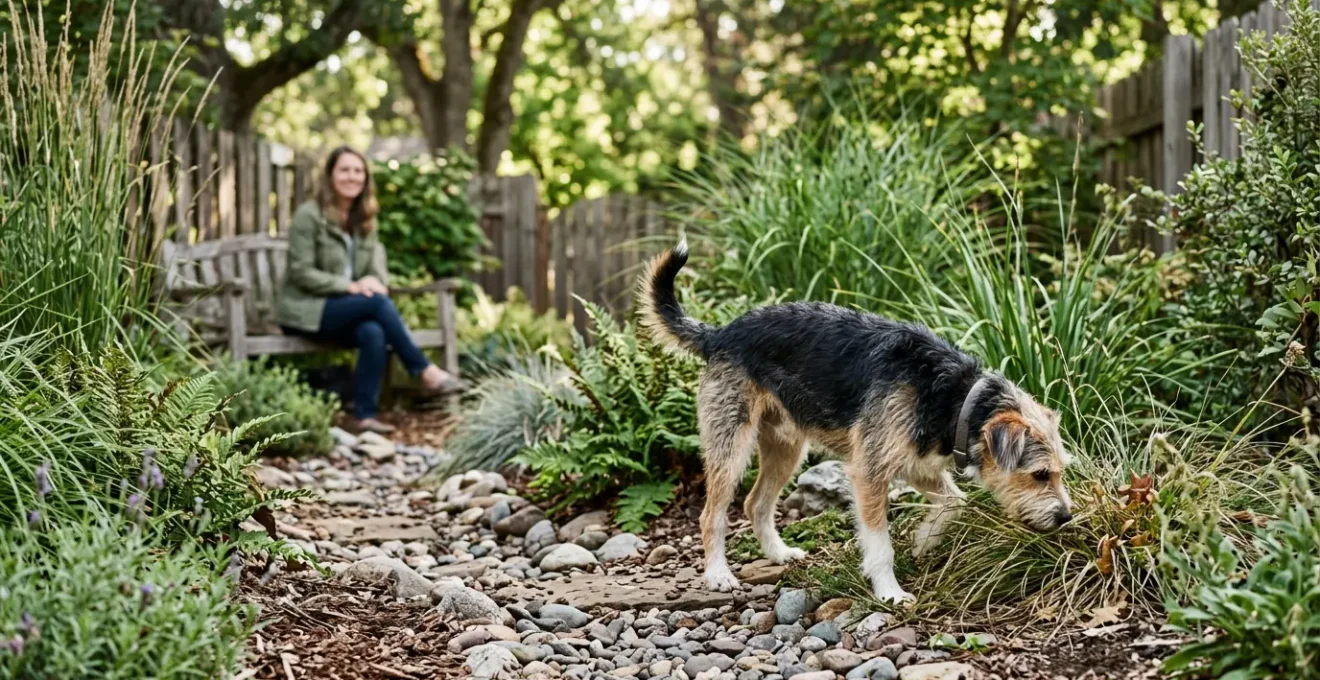
True welfare for an anxious rescue dog is not about creating a risk-free life, but about empowering them with choice and control over their own experiences.
- The traditional “Five Freedoms” of animal welfare are a baseline for survival, not a blueprint for psychological thriving.
- Concepts like “agency” and “consensual interaction” are scientifically proven to reduce stress and build a dog’s confidence.
Recommendation: Shift your focus from simply protecting your dog to actively co-creating their day-to-day life, allowing them to make choices, lead explorations, and communicate their boundaries.
Adopting a rescue dog, especially one with a history of anxiety, is a profound act of compassion. As dedicated guardians, our first instinct is to create a fortress of safety—a world of predictable routines, nutritious meals, and soft beds. We meticulously follow the established rules of good care, believing that by shielding them from all potential harm, we are giving them the best possible life. We tell ourselves that patience, love, and a stable environment are the ultimate cure.
But what if this focus on mere safety, on the absence of negatives, is inadvertently capping their potential for true happiness? The established welfare standards, known as the “Five Freedoms,” have long served as our guide, but they primarily address survival needs. For a complex, sentient being recovering from trauma, thriving requires more than just not being hungry, afraid, or uncomfortable. It requires the presence of positive emotional states, a sense of control, and the freedom to be an active participant in their own life.
This guide challenges the conventional wisdom of anxious dog care. We will pivot from a mindset of protection to one of empowerment. Drawing on modern ethology and animal welfare science, we will explore the powerful concept of “agency”—the psychological need for an animal to have control over its environment and choices. This is the crucial missing piece in helping a high-anxiety dog move beyond a state of managed stress to one of genuine, deep-seated well-being.
Throughout this article, we will deconstruct common practices, decode subtle canine signals, and provide practical, science-backed strategies. You will learn not just how to care *for* your dog, but how to build a true partnership *with* them, fostering a resilience and confidence that no amount of passive safety can replicate.
Summary: A New Standard of Psychological Care for Anxious Dogs
- Why the “Five Freedoms” Are No Longer Enough for Modern Pet Dogs?
- How to Design a Sensory Garden for Dogs in a Small Backyard?
- Science-Based vs. Traditional Care: Which Approach Reduces Cortisol Levels?
- The Hidden Signs of Depression in Dogs That Eat and Walk Normally
- When to Let Your Dog Lead the Walk: The Power of Agency
- Why Hugging Your Dog Might Increase Their Anxiety Levels?
- Why Is Your Dog Yawning When He Isn’t Tired?
- How to Budget for Responsible Pet Guardianship Without Sacrificing Care?
Why the “Five Freedoms” Are No Longer Enough for Modern Pet Dogs?
For decades, the “Five Freedoms” have been the bedrock of animal welfare. These principles—freedom from hunger and thirst; from discomfort; from pain, injury, or disease; from fear and distress; and to express normal behaviors—were revolutionary. They provided a clear framework for ensuring an animal’s basic survival needs were met. For a dog rescued from a situation of neglect, achieving these five freedoms is a monumental and necessary first step. It is the foundation upon which recovery is built.
However, the psychological landscape of a modern companion dog, especially one with anxiety, is far more complex than this framework suggests. The Five Freedoms focus primarily on mitigating negative states. They ensure the dog isn’t suffering, but they don’t inherently promote positive experiences. A dog can have all five freedoms met and still exist in a state of quiet boredom, learned helplessness, or low-level chronic stress. They can be safe, but not truly happy.
This has led welfare science to evolve towards a more holistic approach: the Five Domains Model. This progressive framework has been adopted by major organizations including the RSPCA and World Animal Protection since 2020. It includes four physical/functional domains (Nutrition, Environment, Health, Behavior) but adds a crucial fifth: the Mental State. This model recognizes that the experiences in the first four domains all contribute to the animal’s overall subjective feeling—their psychological well-being. The goal is no longer just to minimize negatives, but to actively provide opportunities for positive experiences like curiosity, play, and contentment.
For an anxious rescue dog, this shift is paramount. Their world has often been one of unpredictability and powerlessness. Simply removing the threats is not enough; we must actively give them back a sense of control and opportunities for positive emotional engagement. This is the transition from ensuring survival to fostering a life that is genuinely worth living.
How to Design a Sensory Garden for Dogs in a Small Backyard?
A sensory garden is a physical manifestation of the shift from passive care to active enrichment. It is a space designed not for human aesthetics, but for canine exploration, offering a rich tapestry of scents, textures, and sounds that allow a dog to engage their natural behaviors. For an anxious dog, it provides a safe, predictable environment where they can decompress and exercise agency by choosing what to interact with. Even a small backyard can be transformed into a powerful therapeutic tool.
The core principle is variety and choice. Instead of a uniform lawn, think in zones. A designated digging area, such as a sandbox or a raised bed filled with loose soil, can redirect a natural instinct away from your flowerbeds. A path laid with different surfaces—smooth river stones, wood chips, soft sand, and patches of tall grass—provides varied tactile stimulation under their paws, which can enhance body awareness and have a calming effect.
Scent is arguably the most critical component. Dogs perceive the world primarily through their noses, and providing complex scents is like giving them a library of fascinating books to read. You can plant dog-safe herbs and plants like lavender, chamomile, rosemary, and mint. These not only provide olfactory enrichment but some, like lavender, have known calming properties. You can also create “sniffing stations” by placing logs, stumps, or a small pile of hay that can be scented with a drop of non-food essential oil (always ensure it’s pet-safe and heavily diluted).
As the overhead view illustrates, the goal is to create distinct areas that invite different behaviors. A low, stable platform can become an observation deck, giving your dog a vantage point to survey their territory. Hiding high-value treats within the mulch or long grass encourages foraging, a naturally calming and rewarding activity. The key is to allow your dog the freedom to explore this space on their own terms, at their own pace. This is not a training exercise; it is an opportunity for self-directed decompression and joy.
Your Action Plan: Creating Decompression Zones in Small Spaces
- Create Quiet Zones: Use soft cloth partitions or strategically placed shrubs to block visual stimuli from the street or neighbors, creating a sheltered, secure area.
- Establish Sniffing Stations: Designate specific spots (e.g., a log, a post) where you can place non-food calming scents like lavender oil or a novel scent like a feather from a different area.
- Design Choice Zones: Ensure the space offers both sheltered observation spots (like under a bush or on a covered patio) and small open areas, allowing the dog to choose their level of exposure.
- Install Varied Texture Paths: Create short pathways using different materials like sand, smooth pebbles, mulch, and grass to provide diverse tactile feedback and promote body awareness.
- Add Gentle Inclines: Use a low ramp, a sturdy raised garden bed, or a small mound of earth to create gentle inclines that improve a dog’s proprioception and can help calm the nervous system.
Science-Based vs. Traditional Care: Which Approach Reduces Cortisol Levels?
Traditional dog care is often rooted in anthropomorphism—the projection of human emotions and intentions onto our dogs. We assume they enjoy tight hugs, want to please us at all times, and should be grateful for the life we provide. While well-intentioned, this perspective can miss the mark on what truly reduces a dog’s stress. A science-based approach, grounded in ethology and behavioral biology, looks at the world from the dog’s point of view and measures well-being through objective markers like cortisol levels.
Cortisol is the body’s primary stress hormone. While short bursts are normal, chronically elevated cortisol levels in anxious dogs can lead to a host of health and behavioral problems. The central goal of a science-based welfare plan is to create a lifestyle that keeps cortisol levels consistently low. This is achieved not by bubble-wrapping the dog, but by increasing their sense of predictability and control. One of the most powerful concepts in this field is “agency.”
As a team of researchers from Frontiers in Veterinary Science explains, agency is a critical component of positive welfare. It is the ability for an animal to make choices and perform voluntary actions that lead to a positive outcome. As they define it:
Agency is the capacity of animals to engage in voluntary, self-generated, and goal-directed behavior that they are motivated to perform. These behaviors can be motivated by positive affective consequences. The collective term for these positive subjective mental experiences resulting from reward-based motivations is ‘positive affective engagement’
– Frontiers in Veterinary Science Research Team, The agency domain and behavioral interactions: assessing positive animal welfare
In practical terms, giving a dog agency means letting them choose the direction of a walk, decide if they want to interact with a visitor, or solve a simple puzzle to get their food. These small acts of control are profoundly empowering and have been shown to lower stress indicators. Similarly, science-backed supplements can play a role. For instance, a 2023 study found that a specific dose led to 100% of dogs showing reduced anxiety from car rides and separation after being treated with CBD oil. This contrasts with traditional approaches that might simply involve forcing the dog into the car, inadvertently increasing their stress.
The Hidden Signs of Depression in Dogs That Eat and Walk Normally
One of the greatest challenges in assessing a rescue dog’s psychological state is our human bias toward overt signs of distress. We look for the obvious: loss of appetite, refusal to walk, or destructive behavior. When we see a dog that eats well and participates in daily walks, we often assume they are “fine” or “settled.” However, canine depression or chronic anxiety can manifest in much subtler ways, often hiding in plain sight.
A dog can be in a state of quiet shutdown and still perform their daily functions. This is a form of learned helplessness, where past experiences have taught them that their actions have no effect on their environment, leading to a passive, resigned state. These dogs are not happy; they are simply existing. Signs to look for include a lack of engagement, a failure to initiate play, a “flat” affect with little expression, or an excessive amount of sleeping that goes beyond normal resting.
Other subtle signs can include:
- Hypervigilance: The dog is constantly scanning their environment, unable to relax, with tense facial muscles and a stiff body posture, even when lying down.
- Displacement Behaviors: Actions like excessive lip-licking, yawning when not tired, or sudden scratching can be signals of underlying stress or conflict.
- Loss of Interest: The dog no longer shows enthusiasm for things they once enjoyed, like a favorite toy, a car ride, or greeting you at the door. The spark is gone.
- Reduced Social Interaction: They may start to withdraw from family members, seeking solitude more often or no longer soliciting affection.
It’s important to understand that many of these issues have deep roots. Research shows that most anxiety disorders in dogs begin to emerge in a critical window. A finding from a canine health study highlights that the critical period for anxiety development in dogs is between 6 and 18 months of age. This underscores why early, positive experiences are so vital and why many rescue dogs carry unresolved trauma from this formative stage into their adult lives.
Recognizing these hidden signs requires a shift in our observational skills. We must learn to look past the surface-level functioning and ask a deeper question: Is my dog truly engaged and joyful, or are they just going through the motions? This compassionate awareness is the first step toward addressing their unmet psychological needs.
When to Let Your Dog Lead the Walk: The Power of Agency
The daily walk is often viewed as a task with a clear objective: exercise for the dog and a potty break. We dictate the pace, the route, and the duration, keeping them in a tight heel. For an anxious dog, this type of structured walk can be another experience where they have no control. By flipping the script and introducing the “decompression walk” or “sniffari,” we can transform this daily chore into a powerful therapeutic session.
A decompression walk is a walk where the dog is in charge. Using a long line (15-30 feet) in a safe area like a park or quiet trail, you allow the dog to lead the way. Their mission is not to get from point A to B, but to explore the world through their most powerful sense: their nose. Sniffing is a fundamental canine behavior that is inherently calming and mentally stimulating. When a dog is deeply engaged in sniffing, their heart rate can lower, and you can observe a “softer” body language. They are gathering information, making choices, and being a dog.
This simple act of ceding control is a profound exercise in building trust and confidence. For a rescue dog whose life may have been dictated by others, the realization that they have a say in their own experience can be transformative. It is a direct application of the principle of agency, providing a positive, self-directed experience that counteracts feelings of helplessness.
As rescue advocate Joelle Andres described in a story about her own anxious dog, this can be a turning point in the relationship. Her insight captures the emotional weight of this practice:
It is so important to give pets agency, especially rescue dogs that have not experienced the ability to be co-partners in their own care. I think that was the turning point in my relationship with Bastian, when he realized that he was getting a say in his own experience, his own day-to-day.
– Joelle Andres, GeoBeats Animals – Rescue Dog Transformation Story
Of course, this doesn’t mean every walk must be a free-for-all. Structured leash skills are still important for safety in busy areas. The key is to find a balance. Intentionally carving out time for several decompression walks per week provides a crucial outlet for your dog’s mental and emotional needs, building a more resilient and confident companion.
Why Hugging Your Dog Might Increase Their Anxiety Levels?
As primates, hugging is one of our primary ways of showing affection and offering comfort. It’s a natural, almost reflexive action for us. When we see our dog feeling anxious, our instinct is to wrap our arms around them in a tight embrace. However, from a canine perspective, this well-intentioned gesture can be interpreted as threatening and confining, paradoxically increasing their anxiety.
In the world of dogs, a forelimb or paw placed over another dog’s shoulders is often a display of dominance or control. Being physically restrained, unable to move away, can trigger a fight-or-flight response, especially in a dog who already feels insecure. While some dogs may learn to tolerate hugs from trusted family members, many simply endure them with varying levels of stress. The “whale eye” (showing the whites of their eyes), a tucked tail, flattened ears, a closed mouth with pulled-back lips, and yawning are all common signs of discomfort during a hug.
This is where the concept of consensual affection becomes crucial. Instead of imposing the type of physical contact that we want, we should invite interaction and let the dog choose to participate. This respects their autonomy and builds trust, teaching them that we are a source of safety, not a source of unpredictable restraint. Building this foundation of trust is far more comforting to an anxious dog than any single hug.
Instead of reaching for a hug, try these alternatives that respect your dog’s boundaries and communication signals:
- Practice the “three-second rule”: Pet your dog for three seconds, then stop and pull your hand away. If they lean in, nudge your hand, or otherwise solicit more contact, you can continue. If they remain still or move away, respect their choice.
- Invite, don’t invade: Sit on the floor at a distance and invite your dog to come to you. Let them initiate the contact. This gives them full control over the interaction.
- Focus on preferred spots: Many dogs dislike being patted on the head. Instead, try gentle scratches on the chest, side of the neck, or near the base of the tail, always watching their body language for signs of enjoyment.
- Soften your approach: Avoid sustained, direct eye contact, which can be perceived as confrontational. Instead, use soft, blinking glances. Announce your presence verbally before approaching a resting dog.
By shifting to a model of consensual affection, we are communicating to our dog in a language they understand. We are telling them, “I see you, I respect you, and your comfort matters to me.” This message is infinitely more powerful than a forced hug.
Why Is Your Dog Yawning When He Isn’t Tired?
A yawn is a universally recognized sign of tiredness in humans. It’s easy to assume the same is true for our dogs. While dogs certainly yawn when they are sleepy, yawning is also one of the most common and frequently misinterpreted calming signals or displacement behaviors. When you see your dog yawn in a context that isn’t related to waking up or settling down for a nap, it’s a valuable piece of communication that warrants a closer look.
Displacement behaviors occur when a dog is feeling conflicted, stressed, or uncertain. They perform a seemingly out-of-context action (like yawning, sniffing the ground, or scratching) as a way to diffuse their own internal tension or to signal to others that they are not a threat. An anxious dog might yawn when a stranger approaches, during a training session where they feel pressured, or when they anticipate a stressful event like a car ride. It’s their way of saying, “I’m a little uncomfortable with this situation.”
The physical characteristics of a stress yawn can also differ from a tired yawn. A physiological yawn is typically wide and relaxed. A stress yawn is often quicker, with more tension in the jaw and facial muscles. Paying attention to the context is everything. Is the dog in a novel environment? Is there a new person or dog nearby? Are you asking them to do something they are hesitant about? If so, the yawn is likely a signal of their emotional state, not their energy level.
Case Study: Yawning as a Displacement Behavior in Anxious Dogs
Research on the FRIDA Protocol, a method for treating separation anxiety, provided clear evidence of this behavior. Researchers observed that during training sessions, dogs would frequently display displacement yawns. These moments occurred when the dogs felt conflicted between their desire to comply with the training and their underlying discomfort with the separation exercises. The study noted that these yawns were consistently quicker and involved tighter jaw movements compared to the relaxed yawns associated with fatigue, confirming their function as a stress-related calming signal.
Learning to recognize a stress yawn is like learning a new word in your dog’s language. It allows you to identify sources of anxiety you might have otherwise missed. When you see it, you can take a step back, assess the situation, and modify it to make your dog more comfortable. You might increase the distance from a trigger, take a break from training, or simply offer quiet reassurance. It is a powerful tool for proactive, compassionate care.
Key Takeaways
- True canine welfare extends beyond meeting basic survival needs (“Five Freedoms”) to actively promoting positive psychological states (“Five Domains”).
- Granting a dog “agency”—the ability to make choices and have control over their environment—is a scientifically-backed method to reduce stress and build confidence.
- Learning to read subtle canine body language, such as stress yawns and signs of consent, is more effective for building trust than anthropomorphic gestures like hugging.
How to Budget for Responsible Pet Guardianship Without Sacrificing Care?
Embracing a science-based, psychologically-attuned approach to dog guardianship may sound expensive, conjuring images of costly gadgets, specialty trainers, and exotic supplements. The truth is, elevating your dog’s welfare is less about spending money and more about investing time, observation, and creativity. Many of the most powerful enrichment strategies are low-cost or even free, relying on re-purposing items you already have and re-imagining daily routines.
The foundation of this approach is understanding that mental stimulation and the opportunity for natural behaviors are more valuable than any store-bought toy. Instead of buying a dozen new toys, rotate a smaller collection weekly to maintain novelty. A “digging box” made from an old cardboard box filled with shredded paper and hidden treats can provide more satisfaction than a pricey puzzle toy. The core philosophy is to create opportunities for your dog to problem-solve and engage their senses.
Mealtime is a prime opportunity for free enrichment. Instead of dumping kibble in a bowl, which takes seconds to consume, use that food for a 10-minute training session or scatter-feed it in the grass. This transforms eating from a passive act into an engaging foraging or learning activity. This simple change provides significant mental exercise, reduces boredom, and strengthens your bond, all without adding a single dollar to your budget. Thoughtful management can also prevent future costs. For instance, behavioral specialists have noted that there is a strong correlation between certain co-sleeping habits and the development of separation anxiety, a condition that can be costly to treat. Proactive, knowledge-based choices can be a form of financial planning.
Here are some high-value, low-cost enrichment strategies you can implement immediately:
- Create Scent Trails: Use a portion of your dog’s daily food ration to lay a “treasure hunt” trail throughout your home or yard for them to follow with their nose.
- DIY Digging Box: Fill a sturdy cardboard box or a plastic bin with old towels, blankets, or safe packing paper, and hide treats or kibble inside for your dog to find.
- Rotate Toys: Keep only a few toys out at a time and swap them with a stored collection every week to keep them feeling new and exciting.
- Convert Mealtime into Training: Use your dog’s regular kibble as rewards for practicing basic obedience, learning new tricks, or playing mind games.
Ultimately, responsible guardianship is measured by the quality of our engagement, not the size of our pet-care budget. By focusing on providing outlets for natural behaviors and granting our dogs agency, we can provide a deeply fulfilling life that no amount of money can buy.
Begin today by integrating one small change. Choose one walk this week to be a “sniffari,” or transform one meal into a foraging game. The journey toward a deeper partnership with your anxious rescue dog starts not with a grand gesture, but with a single, thoughtful act of empowerment.