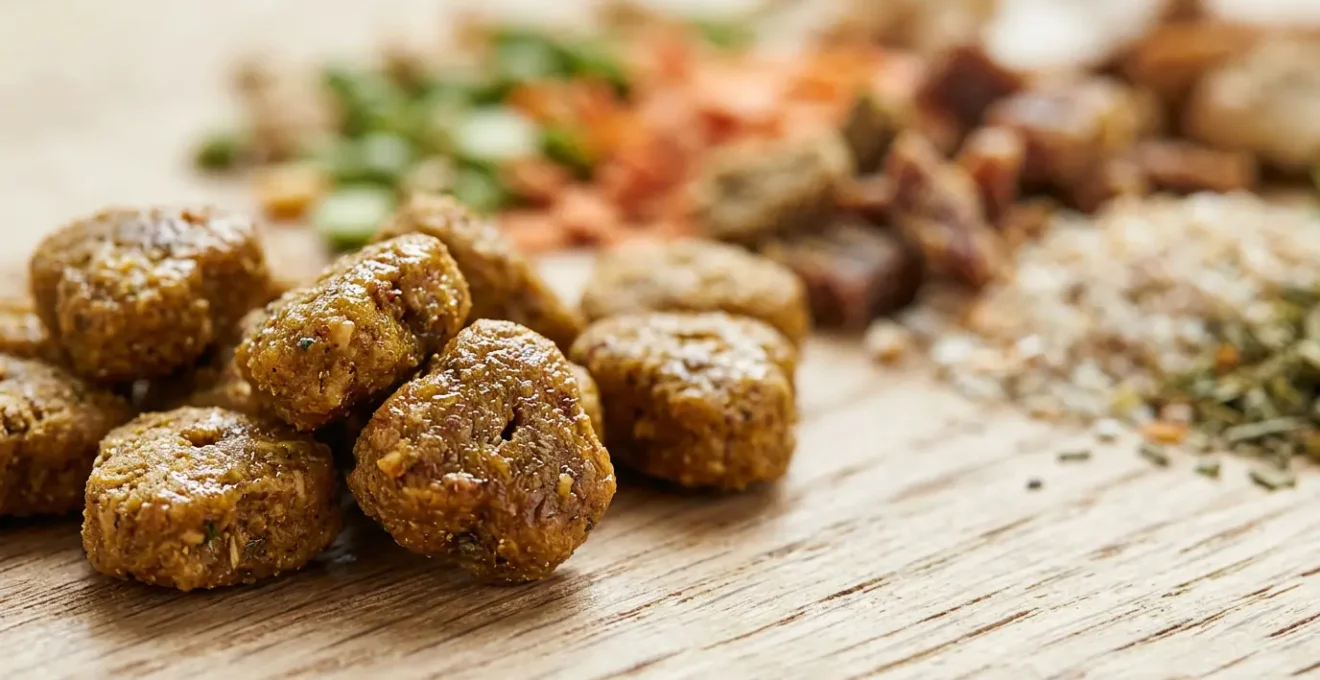
The “premium” label on your dog’s food is often a marketing illusion, not a guarantee of quality.
- Legal naming loopholes allow a food labeled “With Chicken” to contain as little as 3% chicken.
- High prices are frequently driven by packaging and trendy, ineffective “superfoods,” not superior nutrition or safety.
Recommendation: Ignore the front of the bag. Your power as a consumer lies in understanding the ingredient list, the manufacturing process, and the brand’s history of transparency.
Walking down the pet food aisle, you’re bombarded with promises: “gourmet,” “natural,” “premium.” Bags adorned with images of pristine cuts of meat and vibrant vegetables all vie for your attention, assuring you that you’re making the best choice for your beloved companion. The most common advice you’ll hear is to “look for meat as the first ingredient.” While not wrong, this tip is dangerously simplistic. It’s the first step in a much larger game, and the pet food industry knows you’ll probably stop there.
The truth is, manufacturers have perfected the art of “legal deception.” They use carefully worded labels, ingredient manipulation, and marketing buzzwords to create an illusion of quality that often crumbles under scrutiny. Terms like “by-products” and “fillers” are used as bogeymen, while the real issues—like poor nutrient bioavailability from harsh processing, the ineffectiveness of “functional” additives, and a lack of manufacturing transparency—are hidden in plain sight. They count on you being confused by the science and seduced by the marketing.
But what if the key wasn’t just identifying a single ingredient, but learning to decode the entire system? This guide is your whistleblower’s handbook. We will go beyond the platitudes and expose the regulatory loopholes, processing tricks, and pricing games. We’ll give you the tools to analyze an ingredient list with a critical eye, question the claims, and finally understand the difference between what a brand wants you to believe and what you’re actually feeding your dog.
This article provides a complete framework for becoming a more discerning pet food consumer. By understanding the industry’s tactics, you can confidently choose a food based on nutritional science, not just marketing hype. Explore the sections below to master each aspect of the label.
Summary: Decoding the Secrets of the Kibble Bag
- What “With Chicken” Actually Means on a Pet Food Label?
- Cold-Pressed vs. Extruded: Which Retains More Nutrients?
- Why the Most Expensive Bag Is Not Always the Healthiest Option?
- How to Switch Kibble Brands Without Causing Diarrhea?
- The 3 Red Flags of Pet Food Brands With Frequent Recalls
- Carbs vs. Fats: Which Energy Source Does Your Dog Actually Need?
- Glucose Oxidase vs. Lactoperoxidase: Which Enzyme System Works Best?
- How to Restore Your Dog’s Gut Microbiome After a Round of Antibiotics?
What “With Chicken” Actually Means on a Pet Food Label?
One of the most misleading aspects of pet food is the naming convention, which is governed by a set of rules that marketers exploit. The word “with” on a label is a major red flag for a skeptical consumer. According to AAFCO regulations, if a product is named “Dog Food with Chicken,” it only needs to contain a 3% minimum inclusion rate of chicken. That’s a tiny amount, yet it allows the brand to feature chicken prominently on the packaging.
This is part of a broader system of naming rules you must understand to see past the marketing. Here’s how to decode them:
- The 95% Rule: If a product is named “Chicken Dog Food,” it must contain at least 95% chicken (excluding water). This is the most straightforward and desirable label.
- The 25% Rule: If the name includes a qualifier like “Dinner,” “Platter,” or “Entrée” (e.g., “Chicken Dinner”), the named ingredient only needs to make up 25% of the product.
- The “Flavor” Rule: A label like “Chicken Flavor Dog Food” is the most deceptive. It only requires that the food has a detectable taste of chicken, with no minimum percentage required.
Another trick is ingredient splitting. A manufacturer might list “peas, pea protein, pea fiber” as separate ingredients. Individually, they fall lower on the list, but combined, they could easily outweigh the first meat ingredient. This is a deliberate tactic to keep a meat product listed first while bulking the food with cheaper plant-based fillers. Always scan the first five to seven ingredients for split ingredients from the same source (like corn, peas, or potatoes).
Cold-Pressed vs. Extruded: Which Retains More Nutrients?
The ingredient list tells you what goes into the kibble, but the manufacturing process determines how many of those nutrients actually survive to reach your dog’s bowl. The two primary methods are extrusion and cold-pressing. Extrusion is the most common method, where ingredients are cooked at very high temperatures (90-150°C) and pressure. This process is efficient and kills pathogens, but the intense heat can degrade sensitive nutrients like vitamins and enzymes, and damage the structure of proteins, reducing their bioavailability.
In contrast, cold-pressing uses lower temperatures (around 45-75°C). The idea is to gently press the ingredients into a kibble, preserving more of the natural nutrients. This often results in a denser, more crumbly kibble that breaks down more easily in the stomach, which proponents claim aids digestion. The visual difference between the two is often stark.
However, the process isn’t the only factor. As research from the Pet Food Institute highlights, high-quality ingredients processed through extrusion can still yield a better nutritional profile than poor-quality ingredients that are cold-pressed. A brand using “cold-pressed” as a marketing buzzword while starting with inferior raw materials is simply selling you a gimmick. The key takeaway is that while cold-pressing has a theoretical nutritional advantage, it doesn’t automatically make a food superior. Ingredient quality always comes first.
Why the Most Expensive Bag Is Not Always the Healthiest Option?
It’s a natural assumption: a higher price tag must mean higher quality. In the pet food industry, this is often a dangerous myth. Brands leverage sophisticated marketing and premium-looking packaging to justify inflated prices that have little to do with the nutritional content inside the bag. The U.S. Food and Drug Administration (FDA) itself offers a stark warning for consumers who equate price with quality.
Products labeled as premium or gourmet are not required to contain any different or higher quality ingredients, nor are they held to any higher nutritional standards than are any other complete and balanced product.
So what are you paying for? Often, it’s a combination of marketing costs and trendy, but nutritionally insignificant, ingredients. Exotic proteins like bison or kangaroo can dramatically increase the price but offer no proven nutritional advantage over high-quality chicken or beef for most dogs. Similarly, the inclusion of tiny amounts of “superfoods” like blueberries or kale is often just for “label appeal” to attract health-conscious owners, without providing a meaningful dose.
This table breaks down the common drivers of high pet food costs versus their actual nutritional benefit.
| Price Driver | Impact on Cost | Actual Nutritional Benefit |
|---|---|---|
| Exotic proteins (bison, kangaroo) | +40-60% price increase | No superior nutrition vs. chicken/beef |
| Marketing & packaging | +20-30% of retail price | Zero nutritional value |
| Trendy superfoods | +15-25% price increase | Minimal benefit in small quantities |
| Research & quality control | +10-15% price increase | Significant benefit for safety/consistency |
The one area where higher cost can be justified is in research and quality control. Brands that own their manufacturing facilities, conduct extensive feeding trials, and employ veterinary nutritionists often have higher overheads. This investment, however, translates directly into a safer, more consistent product—a far more valuable trait than a pinch of goji berries.
How to Switch Kibble Brands Without Causing Diarrhea?
After uncovering the truths behind your current pet food brand, you may decide it’s time to make a switch. However, changing your dog’s diet abruptly can shock their digestive system, leading to unpleasant outcomes like diarrhea, vomiting, or gas. The key to a successful transition is to do it slowly and methodically, giving your dog’s gut bacteria time to adapt to the new formulation.
A gradual transition over seven to ten days is the standard recommendation. This involves mixing an increasing amount of the new food with the old food until your dog is eating only the new formula. Comparing the macronutrient profiles (protein and fat percentages) of the old and new foods can also give you a clue; the more similar they are, the easier the transition is likely to be. Starting a probiotic supplement a week *before* you begin the transition can also help fortify the gut for the upcoming change.
The most common protocol is a 7-day schedule, but you must monitor your dog’s stool. If at any point their stool becomes loose, pause the transition for a day or two by reverting to the previous ratio of old-to-new food before proceeding. The goal is a seamless switch, not a race to the finish line.
- Days 1-2: Mix 75% old food with 25% new food.
- Days 3-4: Mix 50% old food with 50% new food.
- Days 5-6: Mix 25% old food with 75% new food.
- Day 7: Feed 100% new food.
The 3 Red Flags of Pet Food Brands With Frequent Recalls
The ingredient list tells a story, but a brand’s history and transparency tell the whole truth. Frequent recalls are a glaring sign of poor quality control, but the red flags often appear long before a recall is announced. As a savvy consumer, you need to learn how to investigate a brand, not just its product. One of the biggest, yet least-known, risks is the use of third-party manufacturers, or “co-packers.”
Many pet food brands don’t actually make their own food. They outsource it to large facilities that produce food for multiple companies. This creates a significant risk for cross-contamination and quality control lapses. In fact, an analysis of FDA recall data shows that brands using third-party manufacturers are involved in a vastly disproportionate number of safety incidents. A brand that owns its own manufacturing plants has direct control over safety protocols and ingredient sourcing, a major mark of trustworthiness.
Beyond co-packing, here are three major red flags to watch for when vetting a brand:
- Non-Transparent Manufacturing: The brand is evasive about where its food is made. Look for a clear statement on their website like “Made in our own USA-based facilities.” If you can’t find this information easily, be suspicious.
- Unclear Ingredient Sourcing: The brand doesn’t specify the country of origin for key ingredients, especially proteins, vitamins, and minerals. High-quality brands are proud to state where their ingredients come from. Vague statements are a warning sign.
- History of Lawsuits: A quick Google search for “[Brand Name] + lawsuit” or “[Brand Name] + class action” can be incredibly revealing. Litigation patterns related to ingredient claims, contaminants, or sick pets are a massive red flag that goes beyond official recalls.
A safe food is the foundation of a healthy diet. No “superfood” can compensate for a product tainted with salmonella or containing toxic levels of certain vitamins due to manufacturing errors.
Carbs vs. Fats: Which Energy Source Does Your Dog Actually Need?
The “grain-free” marketing craze has led many owners to believe that all carbohydrates are bad for dogs. This is a dangerous oversimplification. While dogs have no strict dietary requirement for carbs, they are highly efficient at using them for energy. The real issue isn’t carbs themselves, but their quantity and quality. Dogs primarily derive their energy from a combination of fats and carbohydrates. The ideal balance depends on their activity level; highly active dogs benefit from more energy-dense fats, while more sedentary dogs do well with the steady energy from complex carbs.
The industry’s hidden secret is that high carbohydrate content is often a manufacturing necessity, not a nutritional choice. The extrusion process used to make most kibble requires a certain amount of starch—often 30-60% starch content required—to create the familiar kibble shape and texture. This is why even “grain-free” foods are packed with high-starch ingredients like potatoes, lentils, and peas. They’ve simply swapped one carb source for another, often more expensive, one.
Furthermore, the rush to eliminate all grains has had unintended consequences. Research has shown that some grain-free diets heavy in legumes have been associated with a higher risk of a serious heart condition called dilated cardiomyopathy (DCM) in certain dogs. In contrast, whole grains like brown rice and oats provide excellent sources of complex carbohydrates, fiber for digestive health, and essential nutrients. Demonizing an entire food group based on marketing hype, rather than science, can be detrimental to your dog’s health.
Glucose Oxidase vs. Lactoperoxidase: Which Enzyme System Works Best?
As consumers become more educated, brands have started adding “functional ingredients” to their labels to stand out. Enzymes like glucose oxidase and lactoperoxidase are often included in “dental health” formulas, claiming to reduce plaque and tartar. These enzymes work by producing antimicrobial substances that help control oral bacteria. In theory, this is a sound scientific principle.
However, the application method is everything. These enzymes need time and direct contact with the teeth to be effective. As one veterinarian and pet nutrition advocate points out, their inclusion in dry kibble is questionable at best.
The effectiveness of enzymes on dry kibble that is swallowed quickly is limited compared to their use in dental chews or water additives.
– Dr. Karen Becker, DVM, Darwin’s Natural Pet Products Blog
For an expensive functional ingredient to work, it must be included in a meaningful dose and be able to survive the manufacturing process. It’s a classic marketing trick to add a tiny, ineffective amount of a trendy ingredient simply to be able to list it on the bag. As a discerning consumer, you must learn to verify whether these ingredients are included for marketing appeal or for genuine function.
Your Checklist for Verifying Functional Ingredients
- Check Ingredient Position: For an ingredient to be effective, it should appear high on the list, ideally before the salt and vitamin/mineral premix. If it’s at the very bottom, the dose is likely negligible.
- Look for Specifics: Vague terms like “enzymes” are a red flag. Look for named strains (e.g., *Bacillus coagulans* for a probiotic) that indicate research-backed inclusion.
- Research Efficacy: Do a quick search for “[ingredient name] + dog + efficacy” on Google Scholar to see if there is independent scientific evidence supporting its use in dogs for the claimed purpose.
- Verify Concentration: If a brand makes a specific health claim, they should be able to provide the exact concentration (e.g., mg/kg) of the active ingredient. Contact them and ask. A refusal is a red flag.
- Consider Delivery Method: Question the logic. Will a topically-coated enzyme on a piece of kibble that’s swallowed in seconds really clean teeth? Or is it more likely to work in a dental chew that requires prolonged chewing?
Key Takeaways
- Ignore the flashy marketing on the front of the bag; the truth is in the ingredient list and the company’s transparency.
- A high price is not a reliable indicator of quality. It often reflects marketing costs and trendy, ineffective ingredients rather than superior nutrition or safety.
- True quality comes from high-quality ingredients, a controlled manufacturing process (ideally in company-owned facilities), and a brand’s proven track record of safety and transparency.
How to Restore Your Dog’s Gut Microbiome After a Round of Antibiotics?
A healthy gut microbiome is the cornerstone of your dog’s overall health, influencing everything from digestion to immunity. Antibiotics, while often medically necessary, are indiscriminate and wipe out both bad and good bacteria, leaving the gut vulnerable. Many owners turn to kibble with “added probiotics” to help restore this balance. Unfortunately, this is yet another area where marketing preys on good intentions.
The high-heat extrusion process is brutal on delicate microorganisms. In fact, studies on pet food manufacturing show that often less than 10% of the probiotics added before cooking survive to make it into the final product. Some brands now use topical coatings applied *after* extrusion, but the viability of these probiotics through storage and digestion remains a concern. A food that promises probiotic benefits without providing a guaranteed CFU (Colony Forming Unit) count at the time of consumption is selling you hope, not science.
Truly supporting the gut microbiome after antibiotics requires a more robust approach. A “trifecta” of ingredients is the gold standard: prebiotics to feed the good bacteria, a diverse range of fibers to promote a healthy gut environment, and a viable probiotic source. You should look for specific ingredients on the label that signal a genuine focus on gut health.
- Prebiotics: Look for ingredients like chicory root, Fructo-oligosaccharides (FOS), or Mannan-oligosaccharides (MOS).
- Diverse Fibers: A food containing multiple fiber sources like psyllium husk, beet pulp, and pumpkin is better than one with a single source.
- Verified Probiotics: Look for a guaranteed CFU count on the bag or a statement that probiotics are “added after cooking.” The best approach is often to use a dedicated, high-quality probiotic supplement separate from the food during the recovery period.
- Postbiotics: The presence of cutting-edge ingredients like butyrate or yeast cell wall extracts (a source of postbiotics) signals a brand that is truly invested in gut health science.
Now that you are armed with the knowledge to see through marketing tricks and analyze an ingredient list like an expert, the next step is to put it into practice. Approach the pet food aisle not as a consumer, but as an investigator. Your dog’s long-term health depends on it.