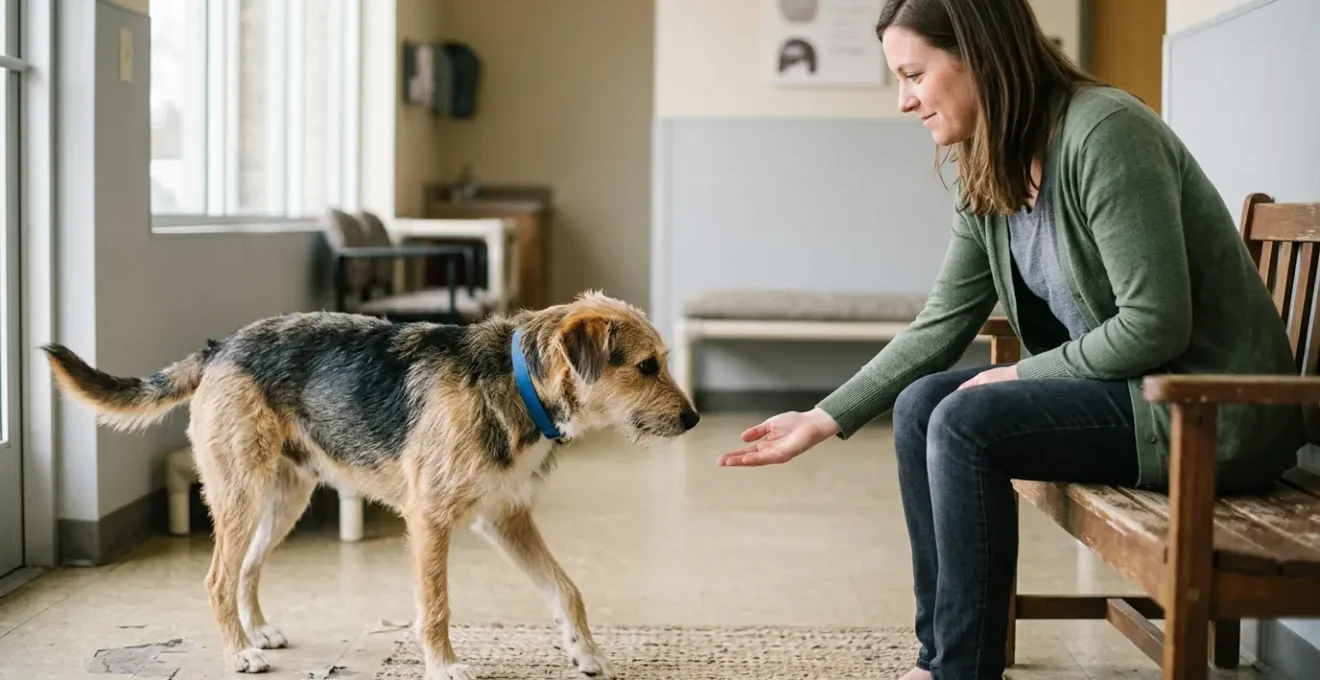
Adoption applications aren’t designed to judge you, but to partner with you in assessing and managing risk for a dog’s future.
- Strict rules like fenced yards are about mitigating known flight risks, not about excluding apartment dwellers with solid exercise plans.
- High adoption fees aren’t for profit; they often barely cover the hundreds of dollars in initial veterinary care a “free” puppy would need.
Recommendation: Stop seeing the process as a test to pass and start seeing it as a conversation where you proactively demonstrate you understand the risks and have a plan to manage them.
You’ve found the one. Those soulful eyes stare back at you from a shelter website, and you can already picture the walks in the park, the couch cuddles, the life you’ll build together. You excitedly fill out the application, a multi-page document that feels more intense than a job interview. You list your vet, detail your work schedule, and measure your fence. Then, silence. Or worse, a polite but firm rejection email. The feeling is crushing. It’s easy to feel judged, inadequate, and completely misunderstood. Why is it so hard to do a good thing?
Many prospective adopters believe the process is about finding a “perfect” home. They focus on presenting an idealized version of their lives, hoping to tick every box. But from my perspective as a shelter director, I can tell you that’s a fundamental misunderstanding. We aren’t looking for perfection. We are looking for preparedness. We are managing risk for an animal who has already been let down at least once. Every question on that application, every policy that seems overly strict, is born from a pattern of past returns and tragedies we are desperately trying to prevent from happening again.
The secret to a successful adoption isn’t about having the biggest house or an empty schedule. It’s about shifting your mindset from a candidate being judged to a partner in the process. This guide will pull back the curtain on the most common and frustrating parts of the adoption journey. We will explore the real reasoning behind our rules, what we’re truly looking for during home visits, and how you can proactively address concerns to demonstrate you are not just a hopeful owner, but a capable and thoughtful guardian for your future best friend.
This article will walk you through the logic of the shelter system, from the most common application hurdles to the financial realities and long-term commitments. By understanding the ‘why’ behind our methods, you’ll be empowered to present your home as the safe, loving, and prepared environment it is.
Summary: Decoding the Dog Adoption Process
- Why Rescues Deny Adopters Without Fenced Yards (and When They Don’t)?
- The Virtual Home Visit: What Are Rescues Actually Looking For?
- Municipal Shelter vs. Private Rescue: Where Should You Adopt?
- The “Unknown History” Risk: Are You Ready for Surprise Triggers?
- Spring vs. Winter: When Is the Best Time to Find Puppies in Shelters?
- Are You Actually Active Enough for a Working Breed?
- Why a “Free” Puppy Costs $2,000 in the First Year Alone?
- How to Apply the 3-3-3 Rule to Set Your Rescue Dog Up for Success?
Why Rescues Deny Adopters Without Fenced Yards (and When They Don’t)?
The “fenced yard required” policy is perhaps the single most frustrating barrier for amazing potential adopters. It can feel like an arbitrary rule that automatically disqualifies anyone living in an apartment or a townhouse. For a population where renters are common— 34% of the U.S. population are in rental housing—this feels incredibly exclusionary. So, let me explain our thinking. This rule is not about exercise. We know a walk or a run is far better exercise than a dog sniffing around the same patch of grass. This rule is about risk mitigation, specifically for two scenarios: flight risk and potty training.
Many dogs arrive at shelters as strays, with a history of bolting. Others are surrendered because they are door-dashers. A secure fence provides a crucial buffer against a split-second mistake—a dropped leash, an open front door—that could lead to tragedy. For puppies or dogs with house-soiling issues, a yard offers a quick, easy, and low-stress way to manage frequent potty breaks, especially overnight. This significantly reduces owner frustration, a common reason for returns. We’re not saying you *can’t* manage without a yard, but we have seen it go wrong countless times.
So, how do you overcome this? You must proactively present a detailed Enrichment and Exercise Plan. Don’t just say, “I’ll walk the dog.” Show, don’t tell. Create a written schedule that demonstrates your commitment and foresight. Your plan should be specific and account for your real life, including work, weather, and energy levels. It should prove that a yard is not necessary because you have already engineered a lifestyle that provides even more stimulation and safety.
Here is a template for what a strong “No-Yard” plan could look like:
- Morning Routine: 45-minute structured walk with designated sniffing spots and training opportunities.
- Midday Break: 20 minutes of indoor puzzle toys, scent work games, and training reinforcement.
- Evening Activity: 30-minute visit to a local park for controlled socialization or a long-leash “decompression walk.”
- Weekend Enrichment: Scheduled activities like hiking on dog-friendly trails, visiting pet-friendly cafes for environmental socialization, or attending a basic agility or nose work class.
- Emergency Backup: Provide the contact information for a pre-vetted dog walker or a nearby doggy daycare for days when you are sick or your schedule is unexpectedly packed.
The Virtual Home Visit: What Are Rescues Actually Looking For?
The “home visit” can feel like the most invasive part of the process. Whether it’s in person or a virtual tour via video call, the idea of a stranger scrutinizing your living space is uncomfortable. Many applicants worry they’ll be judged on cleanliness, decor, or the size of their home. Let me be clear: we are not interior decorators, and we are not looking for a home worthy of a magazine cover. The home visit has one purpose: a safety and preparedness check. We are trying to see the world from a dog’s perspective, especially a curious, scared, or mischievous one.
We are scanning for obvious hazards. Are there toxic plants on the floor? Are there exposed electrical cords perfect for chewing? Is the balcony railing secure? Is there an unfenced pool? These are the “red flags” that send up immediate alarms because they represent common and preventable accidents. Conversely, we are looking for “green flags”—signs that you’ve already thought about a dog’s needs. Seeing a designated spot with a crate or bed, a few starter toys, or baby gates ready to block off-limit areas tells us you’re not just hopeful, you’re prepared. It shows us you’ve moved from the abstract idea of a dog to the practical reality of living with one.
To demystify this further, here is a simplified version of the checklist our adoption counselors often have in their minds during a home visit. This isn’t about being perfect; it’s about being aware.
| Red Flags | Green Flags |
|---|---|
| Unsecured pool or pond access | Baby gates available for restricted areas |
| Exposed electrical cords at dog height | Designated dog supply storage area |
| Toxic plants within reach | Veterinarian contact info posted visibly |
| Unsecured trash cans | Dog bed/crate space already designated |
| No designated dog area | Starter toys and supplies visible |
Municipal Shelter vs. Private Rescue: Where Should You Adopt?
The landscape of animal welfare can be confusing, with different types of organizations that operate under very different models. The two main categories you’ll encounter are municipal shelters (often called “the pound” or Animal Control) and private rescues. Choosing where to adopt from depends on your priorities and what you’re looking for. While Shelter Animals Count data shows a massive 2 million dogs were adopted in 2024, the experience can vary wildly between organizations.
Municipal shelters are typically government-funded and have a contract to serve a specific city or county. This means they are an “open intake” facility; they cannot turn away any stray or surrendered animal from their jurisdiction. This often leads to overcrowding, high stress, and limited resources. Their priority is high-volume adoptions to make space for the constant influx of new animals. The application process may be faster and less stringent. However, they often have less information about a dog’s history or behavior in a home environment.
Private rescues, on the other hand, are usually non-profits funded by donations. They are “limited intake,” meaning they can choose which animals to accept, often pulling dogs from overcrowded municipal shelters. Because they have fewer animals, they can invest more resources into each one, utilizing foster homes to learn about a dog’s personality and needs outside of a kennel. This results in a more detailed understanding of the dog, but also a more rigorous, multi-step application process to ensure they find the “perfect” match and avoid having the dog returned.
It’s a myth, however, that municipal shelters are unsophisticated. Many are at the forefront of adoption innovation.
Case Study: NYC Shelter’s Innovative “Love At First Wag” Event
Animal Care Centers of New York City, a large municipal system, turned a viral concept into reality. They held an event where pre-screened adopters sat in a room, and dogs were brought in one by one to choose their families. This reversed the traditional power dynamic. The shelter still required detailed applications and a donation, but by creating this innovative, dog-centric matchmaking event, they demonstrated how even high-volume shelters can prioritize responsible and creative adoption practices, providing personalized support even when a match wasn’t made.
The “Unknown History” Risk: Are You Ready for Surprise Triggers?
One of the most intimidating aspects of adopting a shelter dog is the “unknown history.” A dog might be a stray with no background information, or the story provided by a previous owner might be incomplete or inaccurate. As an adopter, you are stepping into a story that has already begun, and you don’t know the preceding chapters. This can lead to surprise triggers—unexpected, intense reactions to seemingly normal things: a raised hand, a man in a hat, the sound of a broom, being left alone. Are you ready for that?
This is a major concern for us as adoption counselors. A dog who is perfect in the shelter can display completely different behaviors once the stress of the kennel wears off and they feel safe enough to reveal their true selves. This is why we value adopters who express not just love, but also patience and a willingness to be a detective. As the 3 Lost Dogs Training Team wisely puts it:
No matter how long it takes to acquire this dog and bring them home, the real adoption process does not begin until that dog is sitting in your home, looking up at you going, ‘who are you and why am I here?’
– 3 Lost Dogs Training Team, The Insider’s Guide to Adopting a Shelter Dog
Instead of fearing the unknown, frame the first month as a critical information-gathering period. Your job is not to immediately “fix” the dog, but to observe and learn their language. Keep a simple journal to track their reactions, preferences, and anxieties. This turns a scary unknown into a manageable project and provides invaluable data for a trainer or behaviorist if you need one. It shows us you’re ready for the reality, not just the romance, of rescue.
Your 30-Day Information Gathering Plan
- Week 1: Document Baseline Behaviors. Note their eating speed, sleeping positions, vocalizations, and initial reactions to everyday household sounds like the doorbell or vacuum.
- Week 2: Note Environmental Triggers. On walks, observe their response to other dogs, passing cars, cyclists, children, and loud noises. Don’t force interactions, just observe from a distance.
- Week 3: Track Comfort & Discomfort Zones. Identify their preferred hiding spots when nervous, which toys help them calm down, and if they show preferences for certain people or locations in the house.
- Week 4: Identify Patterns. Look for connections. Is their anxiety higher at a certain time of day? What are the consistent triggers for excitement or fear? What activities reliably help them relax?
- Daily Journaling: Each day, write down just three things: one thing that made them excited, one thing that made them nervous, and one thing that seemed to calm them.
Spring vs. Winter: When Is the Best Time to Find Puppies in Shelters?
Is there a “best” time of year to adopt? While a great dog can come into your life any day of the year, there are distinct seasonal patterns in shelters that can influence your experience. If you have your heart set on a puppy, understanding “puppy and kitten season” is crucial. This typically runs from late spring through early fall. Un-spayed animals roaming in warmer weather lead to a massive influx of litters being born and subsequently surrendered to shelters.
During this peak season, you will find the widest selection of puppies. However, you will also face the most competition. Staff and volunteers are stretched thin, processing applications and caring for a huge number of animals. It can be a frenetic and overwhelming environment. Adopting a puppy during this time requires patience, as the process may be slower and more competitive. It’s a high-demand, high-supply period.
Conversely, the winter months are the “off-season” for many shelters. Intake slows down dramatically. While there may be fewer puppies available, this period offers a unique advantage. The shelter is quieter and calmer, which means the dogs are less stressed and can show their true personalities more easily. More importantly, the staff has more time. They can provide more one-on-one attention, answer your questions in greater detail, and offer more personalized guidance throughout the application process. This can be an ideal time to adopt, especially for first-time owners, as you benefit from a more relaxed and supportive environment. It’s a chance to find a hidden gem without the pressure and chaos of the summer rush.
Are You Actually Active Enough for a Working Breed?
We often see applications from people who dream of owning a Border Collie, an Australian Shepherd, or a Husky. They have visions of majestic hikes and endless games of fetch. The reality, however, is that these working breeds were genetically engineered for a job that requires hours of intense physical and mental effort every single day. A 30-minute leash walk around the block is not just insufficient; it’s a recipe for a frustrated, destructive, and unhappy dog.
This is where “lifestyle honesty” becomes critical. It’s easy to overestimate our own activity levels. You might think you’re an “active person,” but what does that actually look like on a cold, rainy Tuesday in November? One of the biggest reasons for returns is a mismatch between a dog’s energy needs and an owner’s actual lifestyle. To prevent this, we need to see that you have done a serious and honest self-assessment. A great way to do this is to conduct a “Weekly Energy Audit” *before* you even apply for a high-energy dog.
For two weeks, track your real-life activity, not your aspirational goals. The results can be eye-opening. As one adopter shared with us after going through this exercise:
After tracking my actual daily routine for two weeks, I realized I was outdoors only 45 minutes per day on weekdays – nowhere near the 2+ hours I imagined. This honest assessment saved me from adopting a Border Collie mix and led me to a lower-energy senior dog who’s perfect for my real lifestyle, not my fantasy one.
This level of self-awareness is incredibly impressive to an adoption counselor. It shows maturity and a commitment to the dog’s well-being over your own idealized image. Use this log to get a realistic picture:
- Monday-Friday: Track actual minutes spent on outdoor activities (walking, running, etc.). Be brutally honest.
- Weekend: Log realistic availability for dog-focused activities, factoring in errands, social plans, and chores.
- Mental Stimulation Time: Document daily 15-20 minute windows you can dedicate to training or puzzle work. This is just as important as physical exercise.
- Weather Contingency: What is your concrete plan for a week of pouring rain or a blizzard? Note your indoor exercise alternatives.
- Energy Valleys: Identify the times of day you are typically tired and low-energy. How does this align with when a dog might be most active?
Why a “Free” Puppy Costs $2,000 in the First Year Alone?
The adoption fee, which can range from $150 to over $600, is a common point of contention. “Why should I pay so much,” people ask, “when I can get a puppy for free from a friend or an online ad?” This question comes from a misunderstanding of what the adoption fee actually covers. It is not a “price” for the dog; it’s a way to recoup a fraction of the costs we’ve already invested and to fund the care of the next animal in need.
There is no such thing as a “free” puppy. A puppy obtained for free will immediately require a series of vet visits and procedures that are essential for their health and for responsible pet ownership. These costs add up quickly. A shelter adoption fee, in contrast, bundles all of these initial, non-negotiable expenses into a single, heavily subsidized cost. While expert estimates from 2024 show first-year costs between $750-$1,400, this often doesn’t even include unexpected illnesses or the cost of spay/neuter surgery, which can push the total well towards the $2,000 mark.
Let’s break down the incredible value packed into a typical adoption fee. The shelter, by buying services and medications in bulk, can perform these essential services at a much lower cost than an individual owner ever could. The fee you pay is a small percentage of the true retail value of the care the dog has already received.
The following table, based on average veterinary costs, illustrates how a typical adoption fee compares to the out-of-pocket expenses for a “free” puppy. As you can see, the adoption fee represents a significant upfront saving.
| Service/Item | Included in $400 Adoption Fee | Cost for ‘Free’ Puppy |
|---|---|---|
| Spay/Neuter Surgery | ✓ Included | $200-$500 |
| Initial Vaccinations | ✓ Included | $75-$200 |
| Microchipping | ✓ Included | $45-$150 |
| Deworming | ✓ Included | $20-$50 |
| First Vet Exam | ✓ Included | $50-$150 |
| Total Value | $390-$1,050 | $390-$1,050 out of pocket |
Key Takeaways
- Adoption rules are not personal judgments; they are risk management tools based on patterns of why dogs are returned.
- Proactively addressing concerns with a detailed plan (for exercise, safety, etc.) is more effective than having a “perfect” application.
- The adoption process is a partnership. Your goal is to demonstrate you are a prepared, thoughtful, and realistic potential partner for the shelter and the dog.
How to Apply the 3-3-3 Rule to Set Your Rescue Dog Up for Success?
You’ve navigated the application, passed the home visit, and paid the fee. The journey is over, right? Wrong. As we’ve discussed, the real work begins now. To help new adopters manage their expectations, shelter professionals developed the 3-3-3 Rule. This is not a rigid scientific law, but a general roadmap for understanding the stages of a rescue dog’s adjustment to a new home. It stands for the first 3 days, the first 3 weeks, and the first 3 months.
Understanding this timeline helps prevent a common panic we see in new adopters. The dog you meet in the shelter is often not the same dog you will have a week later, or three months later. The initial period can be challenging, and a deep, immediate bond is the exception, not the rule. As trainers from 3 Lost Dogs explain, this is normal:
It’s entirely possible that outside of maybe a honeymoon phase during the first few days, you won’t feel much of a connection with this dog. This tends to freak people out.
– Professional Dog Trainers, 3 Lost Dogs Shelter Experience Guide
This is why the 3-3-3 rule is so valuable. It gives you a framework for patience. It reminds you that trust and comfort are built over time, not instantaneous. For each phase, your role and your goals should change, moving slowly from simply providing a safe space to building a lasting relationship. The key is to go slow, manage your expectations, and let the dog set the pace.
Your action plan should evolve with each stage:
- The First 3 Days (Decompression): Your dog is overwhelmed. Your only job is to be a calm, quiet presence. Avoid visitors, don’t force interaction, and provide a safe, secure space (like a crate or a quiet room). Focus on predictable routines for potty and feeding. Your goal: safety and security.
- The First 3 Weeks (Routine Building): Your dog is starting to learn the rhythms of your home. This is where you establish a consistent daily routine. Walks should be predictable, feeding times consistent. You can begin very gentle bonding exercises and short, positive training sessions. Your goal: predictability.
- The First 3 Months (Trust Development): Your dog is finally starting to feel like they are home. Their true personality emerges. Now you can start gradually introducing them to new people, exploring new environments, and building a deeper bond through consistent training and shared experiences. Your goal: building trust.
Now that you understand the mindset behind the forms and the logic behind the rules, you are ready. Approach your next application not as a test, but as the beginning of a conversation—a chance to show that you are a prepared, empathetic, and responsible partner. Start your search today, armed with the confidence that you are exactly the kind of adopter we are looking for.