Your dog is not a “picky eater”; they are experiencing food-related anxiety.
- The fear of new foods (neophobia) is a powerful survival instinct, not a matter of taste or defiance.
- Overcoming this requires transforming feeding time from a stressful confrontation into a playful, sensory game.
Recommendation: Stop switching kibble brands and start by changing the context of the meal to rebuild your dog’s confidence.
Watching your dog turn their nose up at a new, carefully chosen food can be incredibly frustrating. Whether you have a puppy just starting out or a rescue dog stuck on a single brand, this refusal feels personal. The common advice is to “just be patient” or “mix it in,” but when your dog meticulously eats around every new piece, you realize the problem runs deeper. You start to question if your dog is stubborn, spoiled, or if you’re doing something fundamentally wrong. It’s an exhausting cycle of worry and wasted money on uneaten food.
The truth is, this isn’t about taste preference in the way humans experience it. For a dog, a new food isn’t an exciting culinary adventure; it’s a potential threat. This behavior, known as food neophobia, is a hardwired survival instinct. In the wild, eating something unfamiliar could be fatal. Your dog isn’t being difficult; they are being cautious. The mistake we often make is trying to solve a psychological problem with a culinary solution. We change flavors, add expensive toppers, and bargain with them, inadvertently increasing the pressure and anxiety around the food bowl.
But what if the key wasn’t in the food itself, but in how we present it? The solution lies in understanding and respecting your dog’s psychology. It’s about shifting the entire experience from a high-pressure “eat this now” confrontation to a low-stress, playful exploration. By focusing on building positive associations and giving your dog a sense of control, you can systematically dismantle their fear and build a foundation of dietary confidence that will last a lifetime.
This guide will walk you through the behavioral strategies to achieve this. We’ll explore the science behind your dog’s fear, provide diagnostic tools to differentiate pickiness from pain, and offer practical protocols to introduce new foods in a way that aligns with their natural instincts, not against them.
Summary: A Behaviorist’s Plan to Overcome Food Neophobia in Dogs
- Why Your Dog Spits Out Vegetables and How to Fix It?
- The 16-Week Flavor Rule That Prevents Picky Eating for Life
- Bowl vs. Mat: Which Feeding Method Encourages Neophobic Dogs?
- Is It Pickiness or Pain: How to Tell Before You Switch Foods?
- How to Start Protein Rotation Without Upsetting a Sensitive Stomach?
- Why Your Dog’s Anxiety Might Be Caused by Poor Gut Health?
- Why Guarding Food Is a Natural Survival Instinct, Not Spite?
- How to Plan a Balanced Canine Diet for Active Dogs on a Budget?
Why Your Dog Spits Out Vegetables and How to Fix It?
The classic scenario of a dog carefully eating their kibble and leaving behind a pristine pile of peas is a perfect window into the canine mind. This rejection is often not about the taste but about something more fundamental: texture and unfamiliarity. A dog’s world is primarily experienced through scent and mouthfeel. A sudden, unexpected texture like the firmness of a raw carrot or the mushiness of a cooked pea can be alarming, triggering a neophobic response. They aren’t saying “I don’t like broccoli”; they are saying “I don’t know what this strange object is, and it’s safer to expel it.”
To overcome this, you must become a detective of your dog’s sensory preferences. Is it the crunch they dislike, or the flavor? A simple diagnostic can provide answers. The goal is to isolate the variable. By testing the same vegetable in different forms—raw, steamed, puréed—you can determine if the resistance is due to the physical sensation or the inherent taste and smell. This approach removes the guesswork and allows for a targeted strategy.
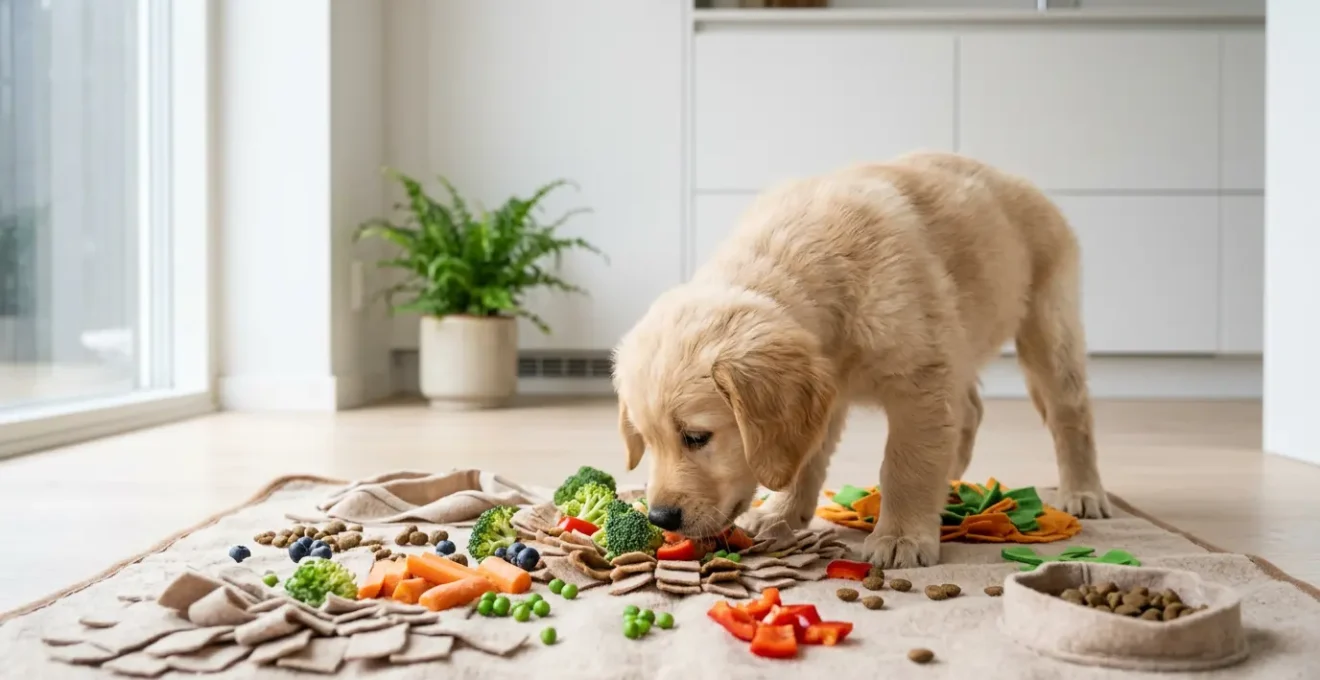
As this image shows, the initial interaction is about investigation, not consumption. Allowing your dog to explore new food items without the pressure to eat is a crucial first step. The moment can be further reframed by separating the introduction of new foods from mealtime entirely. Research shows that using small pieces of a new vegetable, like steamed sweet potato, as a high-value reward during a fun training session creates a powerful positive association. The dog learns that this new item predicts positive outcomes (praise, play), which is a far more effective strategy than simply hoping they’ll eat it from their bowl.
The 16-Week Flavor Rule That Prevents Picky Eating for Life
The most effective way to deal with food neophobia is to prevent it from ever taking hold. There is a golden window in a puppy’s development, roughly between 4 and 16 weeks of age, where their brains are exceptionally receptive to new experiences. This is the critical socialization period, and it applies as much to food as it does to people, sounds, and other dogs. During this time, you are not just feeding a puppy; you are programming their future palate and building their resilience to dietary changes.
The science behind this is compelling. A puppy’s brain is incredibly plastic, forming neural pathways that will define their behavior for life. Exposing them to a wide variety of safe and appropriate food textures and flavors during this window teaches them a fundamental lesson: “new things are safe and interesting.” According to veterinary behavior research, puppies exposed to 30+ different food items between 4-16 weeks show 82% less food neophobia as adults. This is a powerful, proactive strategy for any new puppy owner.
This doesn’t mean a complete diet overhaul every day. It’s about offering tiny, thumbnail-sized tastes of different ingredients. A well-structured exposure plan might look like this:
- Weeks 4-7: Introduce simple, digestible items like a tiny piece of cooked egg, a lick of plain yogurt, or a small cube of steamed carrot.
- Weeks 8-11: Broaden the spectrum with soft fruits like banana, cooked chicken, green beans, and a small amount of pumpkin puree.
- Weeks 12-16: Introduce more complex textures and flavors such as fish (cooked salmon), blueberries, and apple slices.
For owners of rescue dogs who have missed this window, all is not lost. The principles of neuroplasticity still apply, though they require more patience. Research by canine behaviorist Jean Donaldson demonstrates that structured, game-based taste exposure can create new neural pathways in adult dogs. While it may take 3 to 5 times more positive exposures for an adult dog to accept a new food compared to a puppy, a significant 67% of adult dogs eventually accept new foods when introduced through positive, low-pressure games.
Bowl vs. Mat: Which Feeding Method Encourages Neophobic Dogs?
For a dog with food anxiety, a simple bowl is not a neutral object. It can represent a stage for confrontation. It presents the food in a static, take-it-or-leave-it manner, which can heighten pressure and stress. The dog approaches, sniffs the “scary” new item, and feels cornered. There is no room for play, exploration, or a graded approach. When a dog backs away from a bowl, they are often trying to de-escalate a stressful situation. This is where changing the feeding *method* becomes a more powerful tool than changing the food *itself*.
The solution is to transform mealtime from a test into a game. Enrichment tools like snuffle mats, lick mats, or multi-compartment trays tap into a dog’s natural foraging instincts. Instead of being confronted with a pile of food, the dog is invited to search, sniff, and discover. This simple change in presentation has a profound psychological effect: it lowers stress, increases engagement, and reframes the food as a reward to be found rather than a challenge to be endured.
A comparative analysis of feeding methods highlights the dramatic difference in a dog’s response. The data clearly shows that moving away from a traditional bowl significantly improves a dog’s willingness to engage with food.
| Feeding Method | Stress Level | Food Acceptance Rate | Exploration Time |
|---|---|---|---|
| Traditional Bowl | High (confrontational) | 42% | 2-3 minutes |
| Snuffle Mat | Low (playful) | 78% | 10-15 minutes |
| Multi-compartment Tray | Moderate (choice-based) | 65% | 5-8 minutes |
| Lick Mat | Very Low | 71% | 12-20 minutes |
A structured protocol can further enhance this process. A successful three-stage approach using snuffle mats has shown an 85% success rate in desensitizing anxious dogs. Stage one involves simply rubbing the scent of the new food on an empty mat. Stage two introduces tiny crumbs of the new food alongside familiar, high-value treats. Stage three gradually increases the proportion of the new food over a week. This systematic, low-pressure approach allows the dog to acclimate at their own pace, dramatically reducing stress and building positive momentum.
Is It Pickiness or Pain: How to Tell Before You Switch Foods?
Before labeling a dog as “picky,” it is a behaviorist’s absolute duty to rule out underlying medical issues. A sudden or escalating refusal to eat is a significant red flag that should never be ignored. Dental pain, gastrointestinal discomfort, or other systemic illnesses can manifest as what appears to be choosiness. A dog cannot tell you their tooth hurts or their stomach is upset, but they can show you through their behavior at the food bowl. Attributing this behavior to pickiness without a proper veterinary check-up is not only unhelpful but can also be dangerous.
Observing your dog’s specific behaviors around mealtime provides crucial clues. A dog in pain may approach the bowl willingly, attempt to eat, and then drop the food, chew on only one side of their mouth, or yelp. In contrast, a dog with behavioral neophobia will often display anxiety signals *before* even touching the food: backing away, showing the whites of their eyes (whale eye), or nervously licking their lips. After the meal attempt, a dog in pain might exhibit restlessness or stretch into a “prayer position” to relieve abdominal pressure, while a fearful dog will often show relief and return to normal activity once the bowl is removed.
One powerful diagnostic tool used by veterinary behaviorists is the “context change test.” If a dog refuses to eat from their bowl but willingly accepts the exact same food when offered by hand or scattered on the floor, it strongly suggests the issue is behavioral anxiety, not physical pain or a genuine aversion to the food itself. This test revealed that 73% of dogs refusing bowl food were responding to the context, not the content. This simple test can save owners from an endless and expensive cycle of diet changes by correctly identifying the root of the problem.
Your Action Plan: Differentiating Pain from Behavioral Food Refusal
- Observe During Eating: Look for specific signs of pain. Note any food dropping, one-sided chewing, head tilting, or yelping when their mouth touches the food.
- Assess Pre-Meal Behavior: Identify signs of neophobia or fear. Watch for backing away after sniffing, whale eye, and lip licking before any contact is made with the food.
- Monitor Post-Meal Activity: Check for aftermath indicators. Pain can lead to prayer position stretching, grass eating, or general restlessness within 30 minutes of the meal attempt.
- Evaluate Fear-Based Aftermath: Note if your dog immediately shows relief behaviors, avoids the bowl area, but otherwise resumes normal activity once the food is gone.
- Perform the Context Change Test: If safe, offer a small amount of the refused food from your hand or scattered on the floor, far from the bowl. Acceptance in this new context points strongly to a behavioral issue.
How to Start Protein Rotation Without Upsetting a Sensitive Stomach?
Rotating proteins in your dog’s diet is an excellent way to provide a broader range of nutrients and prevent the development of food sensitivities. However, for a dog already prone to neophobia or with a delicate digestive system, a sudden switch can be a recipe for disaster, causing both behavioral setbacks and gastric upset. The key is a slow, systematic introduction that respects both their psychological and physiological needs. Forget the standard seven-day transition; for a sensitive dog, we need a much more gradual and reassuring protocol.
The foundation of this approach is the Single Ingredient Introduction (SII). Before you even think about mixing a new kibble into their bowl, you introduce the new protein (e.g., a tiny, cooked, unseasoned piece of lamb or fish) as a high-value treat completely separate from mealtime. This accomplishes two things: it creates a positive association with the new ingredient and allows you to monitor for any adverse reactions over a 72-hour period without the confusing variable of a mixed diet.
Once the single ingredient is accepted without issue, you can begin the transition process. For highly sensitive dogs, this can be a 21- to 28-day journey:
- Days 1-3: Offer a thumbnail-sized piece of the new protein (plain and cooked) as a treat. Monitor closely for any itching, soft stools, or vomiting.
- Days 4-7: If there’s no reaction, you can proceed. Add the new food as a 5% topper to their current meal.
- Days 8-14: Gradually increase the new food, aiming for about a 10% portion by day 10 and a 25% portion by day 14.
- Days 15-28: Continue the slow increase, replacing another 25% each week until the transition is complete.
To further support their digestive system, consider “priming” their gut beforehand. Adding a high-quality canine probiotic to their diet for two weeks before starting the transition can significantly bolster their gut microbiome, making it more resilient to change. In fact, clinical studies show that dogs given probiotics two weeks before a food transition showed 68% fewer GI upset episodes. This proactive step helps ensure the transition is smooth both inside and out.
Why Your Dog’s Anxiety Might Be Caused by Poor Gut Health?
The connection between the gut and the brain is one of the most exciting frontiers in veterinary science. The “gut-brain axis” is a complex communication network that links emotional and cognitive centers of the brain with intestinal functions. This means that a dog’s anxiety, including food neophobia, may not just be a behavioral issue but could be deeply rooted in the health of their digestive system. An imbalanced gut microbiome can directly influence your dog’s mood and perception of threats.
The mechanism behind this is fascinating. The gut is responsible for producing a significant portion of the body’s neurotransmitters, the chemical messengers that regulate mood. A groundbreaking study reveals the extent of this connection: up to 95% of the body’s serotonin, a key mood-stabilizing neurotransmitter, is produced in the gut. The same 2025 research in *Scientific Reports* found that dogs with reduced microbial diversity in their gut showed anxiety scores that were three times higher than their counterparts with healthy microbiomes. This suggests that a lack of dietary variety can create a vicious cycle: a limited diet leads to poor gut health, which in turn increases anxiety and makes the dog even more resistant to trying new foods.
This biological reality underscores why simply forcing a new food on an anxious dog is so often counterproductive. You might not just be fighting a behavioral preference, but a physiological state of distress. As one expert in the field explains, the impact is direct and profound.
The gut microbiome produces neurotransmitters like GABA, serotonin, and dopamine. These compounds are crucial for maintaining normal sleep, mood, cognition, and anxiety levels in dogs.
– Dr. Rebecca Creech, DVM, The link between gut microbiome and behavior in dogs, dvm360
Addressing food neophobia, therefore, requires a holistic approach. Supporting gut health through a varied diet (introduced carefully), probiotics, and prebiotics isn’t just a “nice to have”; it may be a critical component of managing your dog’s underlying anxiety. It reframes the problem from “my dog is picky” to “my dog’s system is out of balance,” opening up new, more effective avenues for treatment.
Why Guarding Food Is a Natural Survival Instinct, Not Spite?
Food guarding, also known as resource guarding, can be a frightening and confusing behavior for owners. Seeing your otherwise gentle dog growl, snap, or stiffen when you approach their bowl can feel like a personal betrayal. It’s easy to interpret this as spite, dominance, or a sign of a “bad dog.” However, from a canine behaviorist’s perspective, this behavior is rarely malicious. It is an expression of deep-seated anxiety rooted in a primal survival instinct: the fear of scarcity.
In a world of finite resources, an animal that successfully defends its food is an animal that survives to pass on its genes. Your dog’s brain doesn’t necessarily differentiate between a wild environment and your kitchen floor. For a dog with a scarcity mindset, their bowl of kibble is the most valuable resource they have. Guarding it is not an act of aggression against you, but a desperate act of self-preservation. This anxiety is often magnified in dogs from shelters or with unknown histories, where past competition for food was a reality.
Interestingly, this scarcity mindset is strongly linked to food neophobia. Studies have shown that dogs exhibiting resource guarding have neophobia scores 2.5 times higher than non-guarding dogs. The psychology is tragically logical: if a dog perceives their one “safe” food source as precious and scarce, any new food represents not an opportunity, but a threat. The new food could potentially replace their only known source of sustenance, compounding their anxiety and making dietary transitions exponentially more difficult. They are not just afraid of the new food; they are afraid of losing the old one.
Managing this requires a de-escalation protocol focused on building a mindset of abundance, not punishment. Never punish a dog for guarding; this will only validate their fear that you are a threat to their resources and will escalate the behavior. Instead, focus on these strategies:
- Create a feeling of abundance by offering multiple small meals instead of one or two large ones.
- Practice “trade-up” games where you offer something of higher value (like a piece of chicken) in exchange for their current item.
- Feed your dog in a quiet, separate space where they feel secure and don’t have to worry about competition.
- Introduce new foods during calm, positive moments completely separate from their regular feeding area to reduce pressure.
Key Takeaways
- Food refusal is typically driven by anxiety and a fear of the unknown (neophobia), not by taste or defiance.
- Transforming mealtime from a bowl-based confrontation into a game-based exploration (e.g., with a snuffle mat) is the most effective strategy to reduce stress.
- Before addressing behavior, always rule out underlying medical issues like dental pain or GI discomfort with a veterinarian.
How to Plan a Balanced Canine Diet for Active Dogs on a Budget?
Adopting a behavioral approach to your dog’s diet doesn’t have to be expensive. In fact, focusing on variety and whole-food additions can be more budget-friendly than constantly buying new, premium bags of kibble that your dog refuses to eat. The goal is to enrich their current diet with nutrient-dense, low-cost toppers that also serve to expand their palate and build their confidence with new flavors and textures. This strategy provides both nutritional and behavioral benefits without breaking the bank.
Many of the best additions are likely already in your kitchen. Items like canned sardines, eggs, and plain yogurt are packed with high-quality nutrients and offer the strong flavors and smells that can entice a hesitant dog. The key is to introduce these items correctly, following the slow and steady protocols we’ve discussed. A tiny piece of boiled egg or a spoonful of yogurt can be a huge victory in your dog’s journey towards dietary acceptance.
This table from an analysis by the AKC provides a clear cost-benefit look at some of the most effective and affordable toppers, specifically rating their potential to help with neophobia prevention due to their novel or strong flavors.
| Topper Option | Cost per Week | Nutritional Benefits | Neophobia Prevention Score |
|---|---|---|---|
| Canned Sardines (in water) | $3-4 | Omega-3, protein, calcium | High (strong flavor) |
| Plain Greek Yogurt | $2-3 | Probiotics, protein, calcium | Moderate |
| Eggs (boiled) | $1-2 | Complete protein, biotin | High (familiar) |
| Seasonal Vegetables | $2-4 | Fiber, vitamins, antioxidants | Moderate to High |
For active dogs with higher caloric needs, another smart financial strategy is to look beyond the price per bag and focus on the cost per calorie. High-quality foods are often more calorically dense, meaning you may need to feed less per day. Industry analysis shows that simply calculating the kcal/kg can save active dog owners 30-40% on food costs annually, as a seemingly more expensive bag might actually offer better value. This allows you to afford a better quality base diet, which you can then supplement with these budget-friendly, behavior-building toppers.
Ultimately, helping your dog overcome food neophobia is an act of translation. It’s about learning to understand their silent language of anxiety and responding with patience and empathy, not frustration. By shifting your focus from the food to the feeling, you can transform mealtime from a source of stress into an opportunity for connection and confidence-building, ensuring your companion is not just fed, but truly nourished.
Frequently Asked Questions about Food Neophobia in Dogs
How can I tell the difference between a dog who is a picky eater and one with food neophobia?
A “picky eater” might have preferences but will generally try new things, even if they decide they don’t like them. A dog with neophobia exhibits true fear. Look for anxiety signals like backing away, whale eye, or lip licking *before* they even touch the new food. Their refusal is based on fear of the unknown, not taste preference.
I have a rescue dog who is an adult. Is it too late to fix their picky eating?
No, it is not too late. While the 4-16 week puppy socialization window is ideal, adult dogs can still learn to accept new foods. It requires more patience and a greater number of positive exposures. Using game-based feeding methods like snuffle mats and very slow introduction protocols is key to building new, positive neural pathways.
My dog will only eat their food if I add expensive toppers. How can I stop this?
This is a common cycle. The goal is to use toppers as a temporary bridge, not a permanent crutch. Start by gradually reducing the amount of topper by about 10% every few days. Simultaneously, make the base kibble more interesting by using a puzzle feeder or snuffle mat. This increases the value of the kibble through enrichment, making it more rewarding on its own.