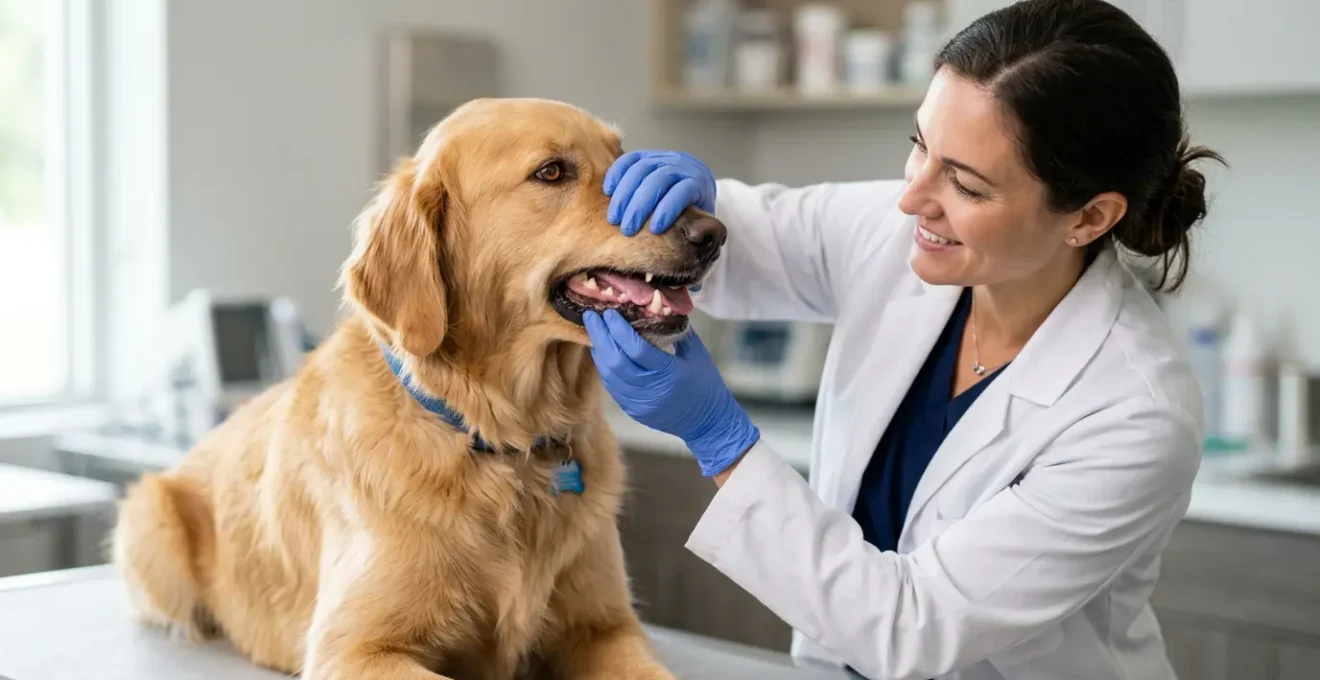
That faint red line on your dog’s gums is not a minor issue; it’s the first sign of gingivitis, a condition that is still 100% reversible if you act decisively.
- Gingivitis is the start of a “biological cascade” that leads to irreversible periodontitis if ignored.
- Reversal depends on immediate mechanical cleaning and targeted home care, not just dental chews or rinses.
Recommendation: Start the 5-step home gum health assessment today to stop the progression and protect your dog’s systemic health.
You’ve noticed it, haven’t you? That thin, angry red line tracing your dog’s gumline, perhaps accompanied by a hint of blood on a chew toy. Your first instinct might be to dismiss it, but as a periodontal specialist, I urge you to see it for what it is: a critical warning sign. While common advice points towards brushing or dental chews, these actions are meaningless without understanding the urgency of this moment. That red line signals Stage 1 gingivitis, the initial phase of periodontal disease. The good news? At this stage, the damage is completely reversible. The bad news? It’s the starting point of a dangerous biological cascade.
Most pet owners don’t realize the gravity. In fact, research shows that over 80% of dogs show signs of periodontal disease by age two. This isn’t just about “clean teeth”; it’s a race against time. The inflammation you see is the body’s response to a buildup of plaque bacteria. If left unchecked, this inflammation will destroy the very tissues that hold the teeth in place, reaching a point of no return: irreversible periodontitis. This is where the battle is won or lost. Ignoring this early sign is like ignoring a small fire in your house; it will not go away on its own.
This guide is designed to empower you with a specialist’s perspective. We will move beyond the platitudes and focus on the science of reversal. You will learn to identify the exact stage of the disease at home, understand the specific risks to your dog’s breed and overall health, and implement a targeted action plan to halt the inflammation, restore healthy gum tissue, and prevent a minor issue from becoming a life-altering condition.
To help you navigate this critical information, we’ve structured this guide to take you from initial diagnosis to a comprehensive understanding of the long-term consequences. Follow along to build a robust defense for your dog’s health.
Summary: Reversing Early Canine Gingivitis – Your Action Plan
- Red Line or Bleeding: Identifying Stage 1 Gingivitis at Home
- Chlorhexidine Rinses: Are They Safe for Daily Use in Dogs?
- Why Greyhounds and Yorkies Are Predisposed to Rapid Gum Recession?
- Does Soft Food Cause Gingivitis Faster Than Dry Food?
- The Link Between Bleeding Gums and Systemic Infection Risks
- How Bacteria Travels From the Gumline to the Mitral Valve?
- The Calcium Mistake That Ruins 90% of Home-Cooked Dog Diets
- Why Neglecting Canine Periodontitis Shortens Your Dog’s Lifespan by Years?
Red Line or Bleeding: Identifying Stage 1 Gingivitis at Home
The first step in winning this battle is accurate reconnaissance. That “thin red line” is the hallmark of Stage 1 periodontal disease, or gingivitis. It represents inflammation confined to the gingiva (the gums) without affecting the underlying bone or ligaments. At this stage, the process is 100% reversible. The redness is caused by vasodilation as the immune system sends white blood cells to the microbial battlefield at the gumline. You may also notice slight swelling or “puffiness” and, crucially, bleeding when the gums are touched or during chewing. This bleeding is not normal; it is a sign of ulcerated tissue and a compromised epithelial barrier.
To properly assess the situation, you need to look beyond a casual glance. The visual difference between healthy and inflamed gums can be subtle at first but is stark when you know what to look for. Healthy gums are a firm, coral-pink color, while gums with gingivitis are a more vibrant, angrier red and appear softer.
As the image above illustrates, the key is to observe the margin where the tooth meets the gum. This is where plaque accumulates and the inflammatory response begins. To help you perform a consistent and thorough check at home, it’s essential to follow a structured process.
Your 5-Step Home Gum Health Assessment Plan
- Look for the line: Gently lift your dog’s lip and search for a thin, continuous red line along the gumline. This is the earliest and most crucial sign.
- Check for swelling: Examine the gums around individual teeth. Do they look puffy or swollen compared to other areas?
- Test for bleeding: Gently press a clean cotton swab or a piece of gauze against the gumline. Any sign of blood indicates active inflammation.
- Compare gum color: Note the overall color. A bright or dark red signifies active inflammation, whereas a healthy mouth has a uniform, pale coral-pink tone.
- Track your findings: Use a simple notebook or a dental scorecard to document your findings weekly. This helps you monitor if your interventions are working or if the condition is progressing.
Chlorhexidine Rinses: Are They Safe for Daily Use in Dogs?
When faced with oral inflammation, many owners reach for chemical solutions like chlorhexidine rinses or gels. Chlorhexidine is a powerful antiseptic, renowned for its ability to kill bacteria on contact and bind to oral surfaces, providing a sustained effect. It certainly has a place in veterinary dentistry, often prescribed for short-term use after a professional cleaning or to manage severe infections. However, its role as a long-term, daily preventative for early gingivitis is highly contested and requires careful consideration. The idea of a “liquid toothbrush” is appealing, but it oversimplifies the problem.
The primary issue with gingivitis is not just the presence of bacteria, but the organized structure they form: plaque biofilm. This sticky matrix protects bacteria from both the immune system and chemical agents. While chlorhexidine can kill free-floating bacteria, it is far less effective at penetrating and destroying established biofilm. True reversal of gingivitis relies on the mechanical disruption of this plaque, something only brushing or specific abrasive actions can achieve. Relying solely on a rinse can create a false sense of security while the underlying biofilm continues to mature and calcify into tartar.
Case Study: The Limits of Chlorhexidine in Beagle Dogs
To understand the real-world effect, consider a controlled study on 22 Beagle dogs. The dogs had chlorhexidine gel applied twice daily for a period of seven days. The results showed that the gel did significantly reduce plaque accumulation compared to the control group during this short timeframe. However, the study’s authors were careful to emphasize that these were short-term benefits. They noted that the long-term safety and, importantly, the impact on the dog’s natural oral microbiome from daily use require much more investigation. This highlights that chlorhexidine is best viewed as a temporary tactical weapon, not a sustainable strategy for daily health.
Furthermore, long-term daily use of chlorhexidine in dogs is associated with side effects, including staining of the teeth and potential disruption of the healthy bacteria that contribute to oral balance. It should only be used under the direct guidance of a veterinarian for a specific, limited duration. For reversing early gingivitis, it is not a replacement for daily brushing.
Why Greyhounds and Yorkies Are Predisposed to Rapid Gum Recession?
While any dog can develop gingivitis, some breeds are running the race against periodontal disease with a significant handicap. If you own a Greyhound, Yorkshire Terrier, or any brachycephalic (flat-faced) breed, you must be hyper-vigilant. Their predisposition is not due to poor hygiene but is rooted in genetics, anatomy, and a unique inflammatory response. For these dogs, the progression from a simple red line to irreversible tissue loss can be terrifyingly fast.
For example, Yorkshire Terriers suffer from what’s known as “miniaturization risk.” Their small jaws often lack the space for 42 teeth, leading to severe crowding. This creates countless nooks and crannies where plaque biofilm can thrive, safe from the cleaning action of chewing or brushing. Furthermore, they are prone to retaining deciduous (baby) teeth, which exacerbates crowding. This anatomical challenge is so severe that a longitudinal study found that 98% of Yorkshire Terriers have at least one tooth with early periodontitis by just 37 weeks of age. Greyhounds, on the other hand, face a genetic issue. Many carry genetic markers that predispose them to an exaggerated inflammatory response and have naturally thin gingival tissue, making them more susceptible to rapid gum recession.
Understanding these breed-specific risks is vital for creating an effective preventative strategy. The table below, based on insights from sources like an analysis in Animal Wellness Magazine, breaks down the primary risk factors.
| Risk Category | Affected Breeds | Primary Mechanism | Age of Onset |
|---|---|---|---|
| Crowding Risk | Pugs, Bulldogs, Shih Tzus | Brachycephalic skull with insufficient jaw space for 42 teeth | 6-12 months |
| Genetic Inflammation Risk | Greyhounds, Italian Greyhounds | Genetic markers for early-onset periodontal disease + thin gingiva | 2-3 years |
| Miniaturization Risk | Yorkshire Terriers, Maltese | Persistent deciduous teeth + reduced jawbone density | Under 1 year |
For owners of these breeds, recognizing that red line is not just a warning—it’s an emergency siren. The window of opportunity to reverse gingivitis is much smaller, and the progression to severe periodontitis is a near certainty without aggressive, early intervention.
Does Soft Food Cause Gingivitis Faster Than Dry Food?
The debate between soft food and dry kibble is a common point of confusion for conscientious dog owners. When it comes to dental health, the evidence is clear: the physical texture of your dog’s food plays a significant role in managing plaque. While soft or wet food is highly palatable and essential for some dogs with specific health needs, it does absolutely nothing to clean their teeth. In fact, it can contribute to a more rapid accumulation of plaque. Soft food particles tend to adhere more readily to the tooth surface, providing a rich substrate for bacterial growth at the gumline.
Conversely, dry kibble offers a distinct advantage through its mechanical action. As a dog crunches on hard food, the edges of the kibble scrape against the tooth surface, disrupting the formation of new plaque biofilm. This is not a substitute for brushing, but it acts as a daily, low-level cleaning that helps to keep plaque from maturing. Think of it as the difference between rinsing a dirty dish and actually scrubbing it with a sponge. The rinsing might remove loose debris, but only the scrubbing will remove the stuck-on grime.
This principle of mechanical cleaning is a cornerstone of veterinary dental advice. As the highly respected Merck Veterinary Manual states, the physical properties of food are directly linked to dental health. Their experts confirm the abrasive benefit of hard diets.
Dogs that have a regular diet of hard kibble develop fewer problems due to the mechanical cleaning effect on the teeth as the food is chewed.
– Merck Veterinary Manual, Dental Disorders of Dogs – Merck Manual
For a dog already showing signs of early gingivitis, choosing a diet that supports dental health is a critical piece of the reversal strategy. If your dog must eat soft food for other medical reasons, it simply means that your commitment to daily manual brushing becomes even more critical to counteract the lack of mechanical cleaning from their diet.
The Link Between Bleeding Gums and Systemic Infection Risks
The most dangerous misconception about gingivitis is that it’s “just a mouth problem.” That bleeding you see on the cotton swab or chew toy is not trivial; it represents a systemic breach. The ulcerated, inflamed gum tissue is a wide-open doorway for oral bacteria to enter your dog’s bloodstream. Every time your dog chews, these bacteria are showered into their circulation in a process known as bacteremia. This transforms a localized oral issue into a whole-body threat, placing an enormous inflammatory burden on the entire system.
Once in the bloodstream, these bacteria can travel to and colonize distant, vital organs. The kidneys, liver, and especially the heart are common targets. The body’s constant fight against this low-grade, persistent infection contributes to chronic inflammation, which is a known driver of many age-related diseases. The link is not theoretical; veterinary research demonstrates an 86.3% prevalence of periodontal disease being linked to systemic complications, including serious renal, hepatic, and cardiac consequences. Reversing gingivitis is therefore not just about saving teeth; it’s about protecting your dog’s vital organs from a bacterial onslaught.
Case Study: The Paw-Sized Wound in Your Dog’s Mouth
To visualize the impact, consider the findings from Cornell University’s veterinary research on the oral-systemic pathway. They documented how oral pathogens like *Porphyromonas gulae* travel from bleeding gums into the bloodstream to colonize distant organs. Most powerfully, their research calculated that a dog with moderate gingivitis has an area of inflamed, infected tissue inside its mouth equivalent to an open, festering wound the size of its own paw pad. Imagine your dog having such a wound on its leg that you never cleaned or treated; the systemic consequences would be obvious. The same is happening inside their mouth.
This powerful analogy reframes the issue entirely. That red line on the gums is the first sign that this internal wound is forming. Taking immediate action to heal the gums closes this dangerous gateway and alleviates the inflammatory burden on your dog’s entire body.
How Bacteria Travels From the Gumline to the Mitral Valve?
The journey of oral bacteria from the gumline to a vital organ like the heart’s mitral valve is a chilling example of the body’s interconnectedness. This is not a random or rare event; it is a predictable consequence of untreated periodontal disease. The process begins at the site of the systemic breach: the inflamed, bleeding gum tissue. As we’ve established, this compromised barrier allows bacteria direct access to the rich network of capillaries just beneath the surface.
Once in the bloodstream, these pathogens don’t travel as vulnerable single cells. They are far more insidious. As the American Veterinary Dental College explains, they travel in protected groups. This gives them a massive survival advantage against the host’s immune defenses.
Bacteria don’t travel as single cells, but often as tiny clumps of biofilm that break off from the tooth surface. These aggregates are more resistant to the immune system and antibiotics.
– American Veterinary Dental College, Periodontal Disease Pathophysiology
This biological “armor” allows them to circulate throughout the body. The heart, with its constant, high-volume blood flow, is a prime destination. The heart valves, particularly the mitral valve, have complex surfaces that can create turbulent blood flow, giving these bacterial clumps an opportunity to attach. Once they adhere, they can form a vegetative growth, a condition known as endocarditis. This colonization leads to inflammation and physical damage to the valve tissue, impairing its ability to function correctly and potentially leading to heart failure.
The visual pathway is stark: from the microbial battlefield of the gums, through the highway of the bloodstream, to a critical command center like the heart. Reversing gingivitis is not just about oral hygiene; it’s about cutting off this deadly supply line at its source.
The Calcium Mistake That Ruins 90% of Home-Cooked Dog Diets
While we focus on the external threat of bacteria, we cannot ignore the internal foundation of dental health: strong bones and resilient tissues. This is especially critical for owners who feed a home-cooked diet. While often prepared with love, an estimated 90% of home-cooked diets are nutritionally imbalanced, with the most common and dangerous mistake being an incorrect calcium-to-phosphorus ratio. This single error can systematically weaken the jawbone, making teeth less stable and more susceptible to the damage of periodontitis.
Meat is naturally high in phosphorus and low in calcium. Feeding a diet of primarily meat without proper calcium supplementation creates a severe imbalance. The body, needing to maintain blood calcium levels at all costs, will pull the mineral directly from its largest reservoir: the skeleton, including the maxilla and mandible (the jawbones). This leads to a progressive loss of bone density, a condition called nutritional secondary hyperparathyroidism. The structural integrity of the jaw is compromised, the tooth sockets weaken, and the teeth can become loose even before severe periodontal disease sets in.
Correcting this is about more than just adding calcium; it’s about achieving the precise ratio required for bone health and providing other key micronutrients for gum tissue repair and immunity. A balanced diet provides the building blocks for a strong defense.
| Nutrient | Function for Oral Health | Daily Requirement | Best Food Sources |
|---|---|---|---|
| Calcium:Phosphorus Ratio | Jawbone density maintenance | 1.2:1 to 1.5:1 | Ground eggshell + balanced meat |
| Vitamin C | Collagen synthesis for gums | 18mg per 10kg body weight | Red bell pepper, broccoli |
| Zinc | Tissue repair and immune function | 2mg per kg body weight | Beef liver, pumpkin seeds |
| Vitamin A | Mucosal health maintenance | 380 IU per kg body weight | Liver, sweet potato |
For those preparing food at home, it’s not enough to just provide good ingredients. You must ensure the foundational chemistry is correct. A simple rule is to add approximately 1/2 teaspoon of ground eggshell (a pure source of calcium carbonate) for every pound of meat served to achieve the proper Ca:P ratio. This simple step can make the difference between building a strong jaw and actively demineralizing it.
Key Takeaways
- Gingivitis is a reversible inflammation; periodontitis is irreversible tissue loss. The red line on the gums is your limited window of opportunity to act.
- Mechanical cleaning (daily brushing, appropriate kibble) is non-negotiable and fundamentally superior to passive solutions like rinses or soft food for disrupting plaque biofilm.
- Bleeding gums create a “systemic breach,” allowing oral bacteria to travel and damage vital organs like the heart and kidneys, which directly impacts your dog’s overall lifespan.
Why Neglecting Canine Periodontitis Shortens Your Dog’s Lifespan by Years?
We have traced the journey from a simple red line to a full-body systemic threat. The final, sobering truth is that this path has a direct and measurable impact on your dog’s lifespan. Neglecting periodontal disease is not a passive choice; it is an active decision that can shorten your companion’s life by several years. The chronic inflammation and persistent bacteremia associated with an unhealthy mouth place a relentless strain on the body’s most vital systems.
The kidneys are a prime example. These organs act as the body’s filtration system, and they are constantly exposed to the bacterial aggregates and inflammatory proteins circulating in the blood from a diseased mouth. This can lead to kidney damage and, eventually, chronic kidney disease (CKD), a leading cause of mortality in older dogs. The connection is statistically undeniable. An enormous analysis of over 3 million pets by Banfield Pet Hospital revealed that dogs with advanced periodontal disease are 2.3 times more likely to develop chronic kidney disease. This is a staggering correlation that every dog owner must take seriously.
The heart, liver, and even cognitive function are similarly affected. The fight against chronic oral infection diverts immune resources and fuels a state of low-grade, systemic inflammation that accelerates the aging process and worsens other concurrent diseases. Reversing gingivitis at its earliest stage is therefore one of the most powerful anti-aging and life-extending actions you can take for your dog. It’s not just about fresh breath or white teeth; it’s about adding healthy, high-quality years to their life.
Your dog’s health is at a critical turning point. By implementing this specialist-level home care plan today, you can reverse the inflammation and prevent the devastating consequences of periodontitis. Begin with the 5-step gum assessment now to take back control of your dog’s oral and systemic well-being.