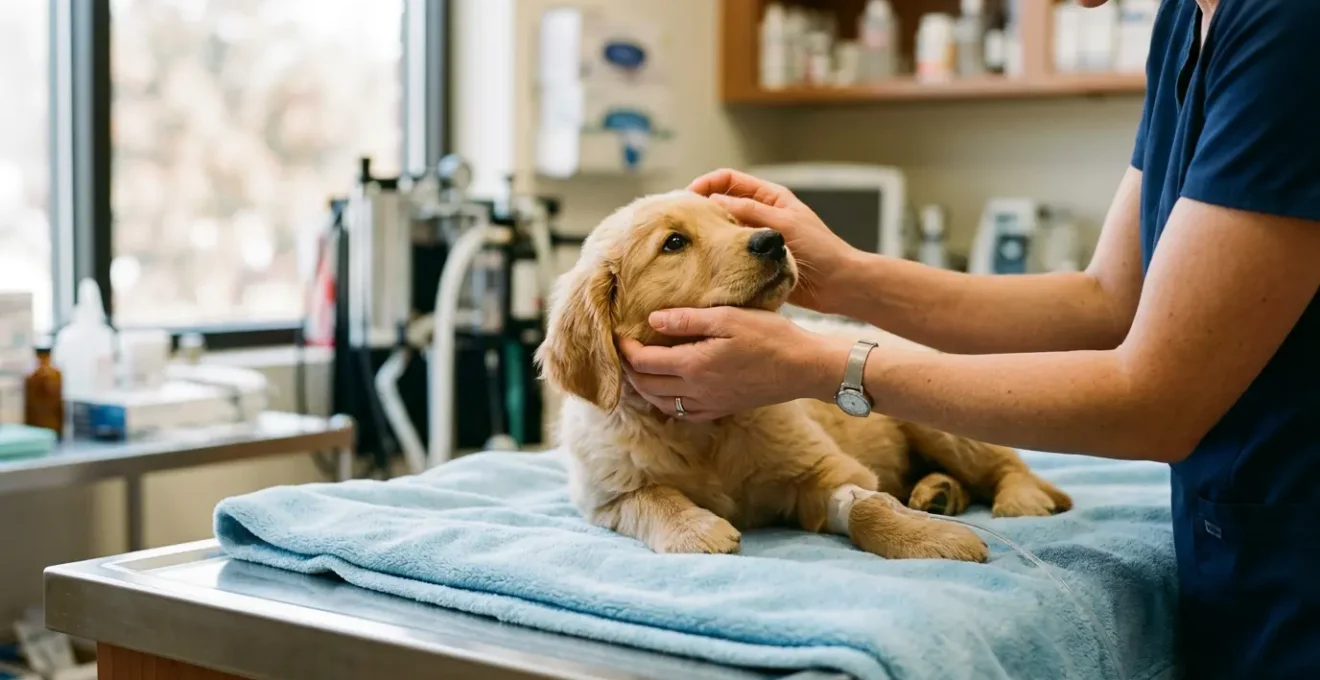
A parvovirus diagnosis is not a death sentence; it’s a declaration of war where your actions are as critical as the veterinarian’s.
- The virus’s primary weapon is catastrophic dehydration, making fluid therapy the non-negotiable core of treatment.
- Environmental control is a second front: the virus can live for months and be carried on shoes, requiring militant disinfection protocols.
Recommendation: Your mission: Become the battlefield commander. Execute supportive care and environmental lockdown with precision to give your puppy a fighting chance.
The silence in the veterinarian’s examination room after the words “positive for parvovirus” is heavy. For any puppy owner, this diagnosis is a gut-punch, a plunge into fear and uncertainty. The immediate advice is always correct: get professional veterinary care. But this is not a passive illness where you can simply hand your puppy over and wait. Surviving parvovirus is an active, brutal fight, and you are a critical soldier on the front lines. Most guides focus on the basics of cleaning and hydration, but they often miss the strategic reality of the situation.
This is a two-front war. The first front is internal, a biological siege within your puppy’s body where the virus attacks the gut lining. The second front is external, a battle against an invisible, incredibly resilient enemy in your home and yard that can live for months, waiting to reinfect or harm other dogs. Understanding the “why” behind each instruction is what transforms a terrified owner into an effective battlefield commander. It’s about knowing why dehydration is the more immediate killer, why your recently vaccinated puppy still got sick, and why the fight continues long after the symptoms disappear.
This guide will not offer false comfort. It will provide a strategic battle plan. We will cover how to eradicate the virus from your environment, understand the true nature of its transmission, manage the critical timelines, and support your dog through the fragile recovery phase. Your role is not just to comfort; it is to fight with knowledge and precision.
To navigate this challenge, we will delve into the critical aspects of the fight against parvovirus. This article breaks down the essential knowledge you need, from environmental disinfection to post-recovery care, providing a clear roadmap for the difficult days ahead.
Summary: The Definitive Battle Plan for a Parvovirus Diagnosis
- Bleach or Steam: What Actually Kills Parvo in the Yard?
- Can You Carry Parvo Home to Your Dog on Your Shoes?
- Why It’s Dehydration (Not the Virus) That Kills Puppies?
- The 3 to 7 Day Wait: When Is Your Exposed Puppy Safe?
- The “Fragile Phase”: Diet and Care After Surviving Parvo
- Sudden Collapse vs. Slow Decline: Why Acute Failure Needs Immediate ER?
- The “Vulnerability Gap”: Why Puppies Get Sick Despite First Shots?
- How to Restore Your Dog’s Gut Microbiome After a Round of Antibiotics?
Bleach or Steam: What Actually Kills Parvo in the Yard?
The fight against parvovirus extends far beyond your puppy; your yard is a primary battlefield. Canine Parvovirus (CPV) is notoriously resilient, capable of surviving for months to over a year in soil, shielded from sun and weather. Steam cleaners are ineffective outdoors as they cannot maintain the necessary temperature over porous, uneven surfaces. Bleach is a common recommendation, but it rapidly loses effectiveness when it comes into contact with organic material like soil and grass. This means you cannot simply spray bleach on your lawn and consider the area safe. The war against environmental contamination requires a more strategic approach, focusing on removal and the use of specialized chemical agents.
The first step is a physical cleanup. You must remove all visible organic matter, primarily feces and vomit, as these are the main vessels for viral shedding. This material is highly infectious and must be bagged and disposed of carefully. Once the area is clear, you can address the contamination. While direct, prolonged sunlight can help degrade the virus on surfaces, it’s not a reliable method for soil. For grassy and soil-covered areas, products containing potassium monopersulfate (like Virkon-S) are superior. These disinfectants are specifically designed to work in the presence of organic material. For effective use, a 1% dilution required for Virkon-S to kill canine parvovirus must be applied to the affected areas, according to disinfection protocols for parvo in yards.
After application, the disinfectant needs a minimum of 10 minutes of contact time to be effective. During this period, and until the area is completely dry, no animal should be allowed access. For hard surfaces like patios, driveways, and kennels, a 1:30 dilution of household bleach and water remains the gold standard, but again, only after all organic debris has been scrubbed away. Treating your yard is not a one-time event; it’s a campaign of sustained environmental control to prevent reinfection and protect other animals.
Ultimately, a combination of physical removal, targeted chemical warfare, and natural UV exposure forms the most robust defense for your outdoor spaces.
Can You Carry Parvo Home to Your Dog on Your Shoes?
Yes, absolutely. This is one of the most misunderstood aspects of parvovirus transmission and a critical lapse in many owners’ biosecurity. The virus is not just passed from dog to dog. It is an environmental contaminant that travels on “fomites”—inanimate objects that carry infectious agents. Your shoes are the most common fomites, acting as unknowing taxis for the virus, bringing it from a contaminated park, sidewalk, or vet clinic floor directly into the sanctity of your home. This is why a puppy who has never left the house can suddenly fall ill.
The American Veterinary Medical Association confirms that canine parvovirus spreads through contact with contaminated surfaces including clothing, shoes, collars and leashes, with the virus being incredibly resistant to environmental conditions. A study on environmental contamination highlights that the virus can survive for long periods, waiting for an opportunity. Simply wiping your feet on a mat is not enough. To protect an unvaccinated puppy or prevent reinfection in a recovering one, you must assume your shoes are contaminated every time you enter your home. This requires establishing a strict decontamination protocol at your entryway, creating a “clean” and “dirty” zone.
This is not about paranoia; it is about strategic defense. By treating every entry point as a potential breach, you effectively create a quarantine zone around your vulnerable pet. This militant approach to fomite control is non-negotiable in the war against parvo.
Your Action Plan: Establishing a Home Decontamination Zone
- Create a “decontamination station” at every entrance with dedicated “outdoor” shoes that never cross the threshold into the main living area.
- Prepare a bleach solution (1 part bleach to 30 parts water) in a spray bottle or a foot bath tray for disinfecting the soles of any shoes that must enter.
- Ensure a minimum of 10 minutes of contact time for the bleach solution to effectively kill the virus on hard, non-porous surfaces.
- Wash your hands thoroughly with soap and water for at least 20 seconds immediately upon entering your home, before interacting with your puppy.
- Consider changing your clothes if you have visited high-risk areas like dog parks, shelters, or veterinary clinics, placing them directly into the wash.
Implementing these steps is one of the most powerful actions you can take as an owner to control the battlefield and protect your dog.
Why It’s Dehydration (Not the Virus) That Kills Puppies?
This is the central, brutal truth of the parvovirus war: puppies rarely die from the virus itself. They die from the catastrophic biological cascade the virus unleashes. Parvovirus is a saboteur. It launches a devastating attack on the lining of the small intestine, destroying the cells responsible for absorbing nutrients and water. This turns the gut into an open, bleeding wound. The result is severe, unrelenting vomiting and diarrhea, which causes the body to lose fluids and vital electrolytes at an astonishing rate. This rapid fluid loss is the primary killer.
The body goes into shock as blood volume plummets. Organs, including the kidneys and heart, begin to fail due to a lack of blood flow and oxygen. The timeline for this collapse is terrifyingly short; a study on parvo’s progression shows most deaths occur within 48 to 72 hours after symptoms first appear. This is why waiting even a few hours can be a fatal mistake. The puppy cannot drink enough to replace what it’s losing, and the damaged gut can’t absorb what little it might take in. This makes aggressive fluid therapy the absolute cornerstone of treatment.
Intravenous (IV) fluids are a lifeline. They bypass the wrecked digestive system and deliver hydration and balanced electrolytes directly into the bloodstream, propping up the circulatory system and keeping the organs functioning. This buys the puppy’s immune system precious time to mount its own defense and for the gut to begin healing. As Dr. Aly Cohen, a veterinarian at Cornell University’s College of Veterinary Medicine, states:
IV fluids and management of electrolytes are the cornerstone of treatment for parvo.
– Dr. Aly Cohen, Cornell University College of Veterinary Medicine
Understanding this mechanism is critical. You are not just fighting a “stomach bug”; you are fighting a biological siege that causes systemic collapse. Every moment counts in the race to restore and maintain hydration.
This is why immediate veterinary intervention with IV support is the single most important factor determining whether a puppy will survive.
The 3 to 7 Day Wait: When Is Your Exposed Puppy Safe?
The period after a known or suspected exposure to parvovirus is one of extreme anxiety. You are watching your puppy for any sign of illness, living in a state of high alert. This waiting game has a scientifically defined timeline, known as the incubation period. This is the time between the virus entering the body and the first appearance of clinical signs. For parvovirus, this window is a crucial intelligence briefing for any owner-turned-battlefield-commander.
The virus does not cause symptoms immediately. After exposure, it first targets rapidly dividing cells in the lymph nodes and tonsils to replicate itself, building its army in silence. This process takes time. According to veterinary resources, dogs typically show parvovirus symptoms within this 3 to 7 day timeframe after infection. The most common first sign is not vomiting, but lethargy—a sudden, profound lack of energy and interest. Loss of appetite quickly follows. Vomiting and diarrhea usually appear around day 4 to 6 post-exposure. This is the critical window where the battle becomes visible.
If a puppy has been exposed and shows no symptoms by day 10, the risk of it developing the disease from that specific exposure drops significantly. By day 14, if the puppy remains healthy, it is generally considered to be in the clear. This timeline allows for a structured monitoring plan, moving from high alert to cautious optimism.
| Days Post-Exposure | Risk Level | What to Monitor |
|---|---|---|
| Days 1-3 | Low (Silent replication) | No visible symptoms yet |
| Days 4-6 | High (Symptom onset) | Watch for lethargy, loss of appetite |
| Days 7-10 | Critical | Vomiting, diarrhea if infected |
| Days 11-14 | Decreasing | If no symptoms by day 14, likely safe |
This structured waiting period is not passive; it’s a phase of intense observation, where catching the first subtle sign of lethargy can give you a critical head start in the fight.
The “Fragile Phase”: Diet and Care After Surviving Parvo
Surviving the acute phase of parvovirus is a major victory, but the war is not over. The puppy enters what can be called the “fragile phase” of recovery. The intestinal tract has been ravaged by the virus, and while it is healing, it is incredibly sensitive. The wrong food or too much food too soon can trigger a relapse of vomiting and diarrhea, setting back recovery and potentially causing further damage. Reintroducing food must be a slow, methodical, and gentle process, guided by the principle of maximum digestibility.
Veterinarians will typically withhold all food until the puppy has stopped vomiting for at least 12-24 hours. The first meals should consist of a bland, easily digestible diet. This often means small, frequent portions of boiled chicken (without skin or bones) and plain white rice. This combination provides simple protein and carbohydrates that are gentle on the recovering gut. Over the next week, the transition to a more complete diet should begin, usually with a prescription gastrointestinal food recommended by your vet. These diets are specially formulated to be low in fat and high in digestible ingredients to promote gut healing.
The transition back to the puppy’s normal food is the final step and must be done gradually over one to two weeks. You should start by mixing a small amount (25%) of the regular food with the prescription diet, slowly increasing the proportion every few days while monitoring for any signs of digestive upset. This slow re-acclimation allows the newly healed gut lining and its resident microbiome time to adapt. Pushing this process too quickly is a common mistake that can lead to significant setbacks.
Your Action Plan: The Post-Parvo Recovery Diet
- Days 1-3 (Post-vomiting): Start with a bland diet of boiled chicken and white rice, given in small, frequent meals.
- Days 4-7: Gradually introduce a prescription gastrointestinal diet as recommended by your veterinarian.
- Week 2: Begin mixing the prescription diet with a small amount (25%) of the puppy’s regular food.
- Weeks 3-4: Slowly increase the proportion of regular food in 25% increments every few days, monitoring stool quality.
- If any digestive upset occurs, revert to the previous step for a few days before attempting to advance again.
This meticulous dietary management is the final, critical support you can provide, ensuring the hard-won victory over the virus translates into a full and healthy recovery.
Sudden Collapse vs. Slow Decline: Why Acute Failure Needs Immediate ER?
The onset of parvovirus symptoms is not a “wait and see” situation; it is an acute medical emergency. The difference between a puppy that survives and one that doesn’t is often measured in hours. While some illnesses present with a slow decline, parvo is a sudden collapse. As we’ve established, the virus triggers a rapid dehydration cascade that can quickly lead to hypovolemic shock—a state where the heart can no longer pump enough blood to the body’s organs. This is an acute system failure, and it requires immediate, aggressive intervention that can only be provided in an emergency room or veterinary hospital setting.
The temptation for owners to “try and manage it at home” is understandable but statistically fatal. The puppy needs, at minimum, intravenous fluids to bypass its non-functional gut, powerful anti-nausea medications to stop the fluid loss, and often, antibiotics to prevent secondary bacterial infections from overwhelming its weakened immune system. These are not treatments that can be administered effectively at home without veterinary training and equipment. The brutal reality is stark: data indicates a horrifying mortality rate of over 90% for dogs who receive no treatment for their parvovirus symptoms. With aggressive in-hospital supportive care, that number flips, with survival rates climbing to around 90%.
This is not a gamble worth taking. A puppy that is merely lethargic and has skipped one meal in the morning can be collapsed and non-responsive by the evening. The speed of this decline cannot be overstated. Recognizing the early signs—lethargy, loss of appetite, a single episode of vomiting—as a five-alarm fire is the mindset that saves lives. You are not overreacting by rushing to the ER. You are responding appropriately to an imminent system failure. Every minute you wait, the dehydration deepens, the shock progresses, and the odds of survival plummet.
Delay is the virus’s greatest ally. Do not give it that advantage. Treat the first symptom as a signal for immediate professional intervention.
The “Vulnerability Gap”: Why Puppies Get Sick Despite First Shots?
One of the most heartbreaking questions a responsible owner can ask is, “But I had him vaccinated. How did this happen?” The answer lies in a complex immunological window known as the “vulnerability gap.” This is a period in a puppy’s early life where it is caught between two immune systems: the one it received from its mother and the one it is trying to build for itself. Understanding this gap is crucial to appreciating why the full series of puppy shots is so vital.
A puppy is born with maternal antibodies, passed down through the mother’s milk (colostrum), provided she herself was vaccinated. These antibodies are a gift, providing temporary, “passive” immunity for the first several weeks of life. However, these same maternal antibodies see the vaccine as an invader and neutralize it before the puppy’s own immune system can learn from it. As a result, the first shots given while maternal antibodies are still high may be ineffective. The vulnerability gap opens as the maternal antibodies naturally wane, but before the puppy’s own immune system is mature enough to mount a full response to the vaccine. This is the period of maximum danger.
This gap’s timing varies from puppy to puppy, typically occurring between 6 and 12 weeks of age. This is why veterinarians administer a series of vaccinations every 3-4 weeks. The goal is to catch the precise moment the maternal antibodies drop low enough for the vaccine to work, effectively closing the gap. No single shot can do this reliably, only a properly timed series. A study on maternal antibody interference confirms this dynamic, showing it’s a race against time.
The following table illustrates this critical period, showing why a single shot is not enough to confer protection.
| Age | Maternal Antibodies | Vaccine Response | Protection Level |
|---|---|---|---|
| 0-6 weeks | High | Poor | Protected by mother |
| 6-8 weeks | Declining | Variable | Vulnerability gap begins |
| 8-12 weeks | Low | Improving | Critical period |
| 16-20 weeks | None | Full | Protected by vaccine |
This is not a failure of the vaccine or your care; it is a biological reality that underscores the importance of completing the entire vaccine series and maintaining strict quarantine until it is finished.
Key Takeaways
- The primary killer in parvovirus is not the virus itself, but the rapid, catastrophic dehydration it causes. Immediate fluid therapy is the number one priority.
- A “vulnerability gap” exists where maternal antibodies block vaccine effectiveness, leaving puppies susceptible even after their first shots. Completing the full series is non-negotiable.
- Recovery is a fragile phase. The gut is healing and requires a slow, methodical reintroduction of a highly digestible diet to prevent relapse.
How to Restore Your Dog’s Gut Microbiome After a Round of Antibiotics?
After the virus has been defeated, the final battle is to rebuild what was destroyed. Parvovirus, and often the antibiotics used to treat secondary infections, act as a bomb on the gut microbiome—the complex ecosystem of beneficial bacteria essential for digestion and immune health. Restoring this internal ecosystem is a critical part of ensuring long-term health and preventing chronic digestive issues. This rebuilding process relies on a strategy of repopulation and nourishment, primarily through probiotics and prebiotics.
Probiotics are the reinforcements: live, beneficial bacteria that help to repopulate the devastated gut. It is crucial to use a veterinary-specific probiotic, as these contain strains proven to be effective and safe for a dog’s unique digestive system. Prebiotics are the supply lines: specific types of fiber that act as food for these good bacteria, helping them to thrive and establish a strong colony. Many high-quality veterinary supplements are “synbiotics,” meaning they contain both probiotics and prebiotics for a combined effect.
In severe cases, veterinarians may use a more advanced technique called Fecal Microbiota Transplantation (FMT). This involves transplanting fecal matter from a healthy donor dog into the sick puppy. While it may sound unpleasant, it is a highly effective method of rapidly re-establishing a diverse and healthy microbiome. Research has shown that transplanting fecal material from healthy dogs can reduce diarrhea duration in parvo puppies. This cutting-edge therapy highlights how critical a healthy microbiome is to recovery.
By focusing on restoring the gut, you are fortifying your puppy’s defenses against future health challenges and completing the final mission in the war against parvovirus.
Frequently Asked Questions about Parvovirus Treatment and Care
What are probiotics vs prebiotics for dogs?
Probiotics are live beneficial bacteria that repopulate the gut, while prebiotics are fibers that feed these good bacteria. Synbiotics combine both for maximum benefit.
Can I give my dog human probiotics after parvo?
It’s best to use veterinary-specific probiotics as they contain strains proven beneficial for dogs’ unique digestive systems.
How long should probiotic supplementation continue?
Most veterinarians recommend continuing probiotics for at least 4-6 weeks after antibiotic treatment ends to fully restore gut health.