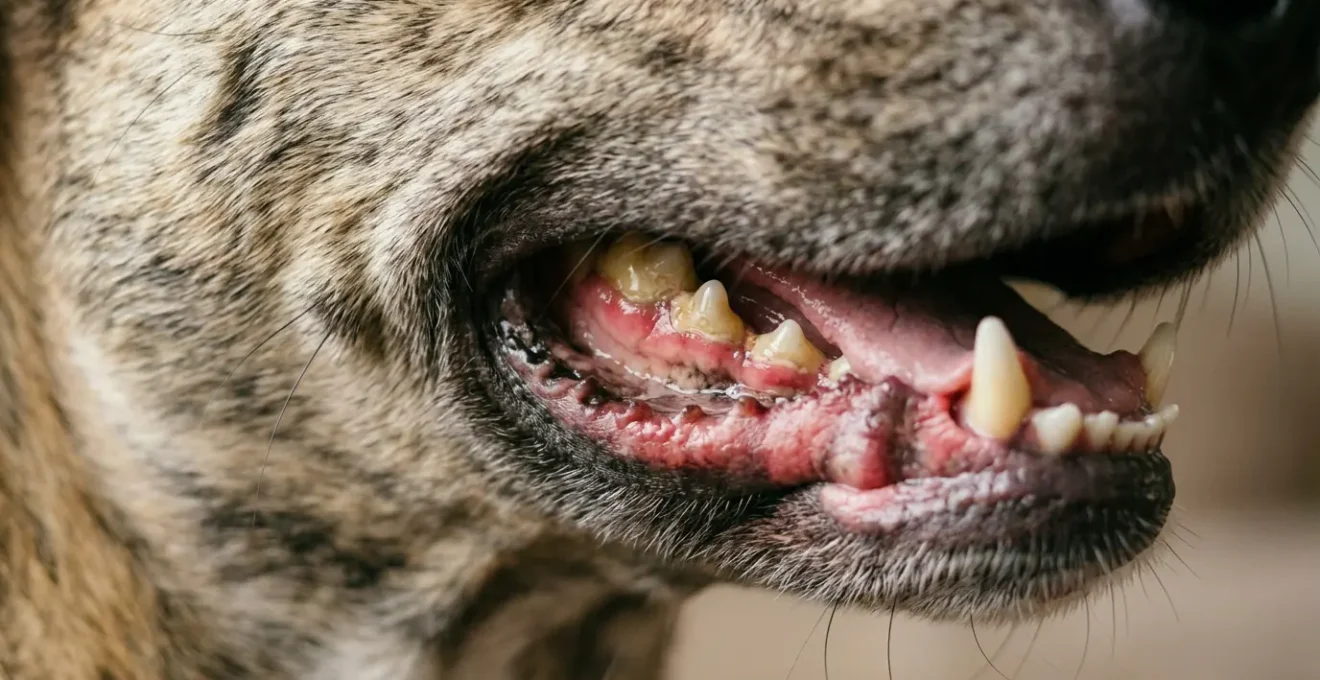
The “doggy breath” you’ve been ignoring is not a normal part of aging; it is the primary symptom of periodontal disease, a condition that allows bacteria to enter the bloodstream and silently attack your dog’s vital organs, measurably reducing their lifespan.
- Periodontal disease is a systemic infection, not just a cosmetic dental issue. Bacteria from the mouth directly cause or worsen heart, kidney, and liver disease.
- Common “solutions” like kibble and anesthesia-free cleanings are ineffective and can mask the progression of this life-threatening condition.
Recommendation: Prioritize daily tooth brushing and annual professional dental assessments under anesthesia to break the cycle of infection and protect your dog’s long-term health.
As a veterinary dentist, the most common and dangerous misconception I encounter from loving dog owners is the belief that bad breath is normal. It is not. That unpleasant odor is a clinical sign of active infection. It’s the smell of tissue destruction caused by billions of bacteria thriving in the plaque and tartar on your dog’s teeth. While many owners worry about the appearance of brown teeth, the real danger is invisible. This is not a dental problem; it is a chronic, low-grade systemic disease silently poisoning your dog from the inside out.
Most pet owners rightfully focus on visible tartar and may try solutions like special kibble or dental chews. However, these often fail to address the root cause of the disease, which festers below the gumline. The fundamental issue is the breakdown of the oral barrier—the delicate seal of the gums around each tooth. When this barrier is compromised by inflammation (gingivitis), it creates a direct superhighway for pathogenic bacteria to enter the bloodstream every time your dog chews or even drinks water.
This article will shift your perspective from “cleaning teeth” to “protecting organs.” We will dismantle the myths that provide a false sense of security and expose the hidden dangers of a diseased mouth. More importantly, we will outline the definitive, evidence-based strategies that not only preserve your dog’s teeth but also safeguard their heart, kidneys, and liver, potentially adding years of healthy, vibrant life to your companion.
This guide provides a clear path forward, explaining the science behind the mouth-body connection and offering practical steps for prevention, treatment, and financial planning. Explore the sections below to understand how to truly protect your dog’s overall health.
Summary: A Veterinary Guide to Canine Periodontal Disease and Systemic Health
- Why Kibble Does Not Actually Clean Your Dog’s Teeth?
- Anesthesia-Free Cleaning: The Cosmetic Procedure That Hides Disease
- How to Tell If Your Stoic Dog Is Suffering From Toothache?
- Antler vs. Raw Bone: Which Chew Is Less Likely to Fracture Teeth?
- How to Train a Head-Shy Dog to Accept a Toothbrush in 14 Days?
- How to Prepare “Mush” That Is Still Nutritionally Complete?
- The Annual Vet Budget: How Much Should You Set Aside per Year?
- How to Prevent Endocarditis by Maintaining Your Dog’s Oral Barrier?
Why Kibble Does Not Actually Clean Your Dog’s Teeth?
The belief that dry kibble scrapes teeth clean is one of the most persistent and damaging myths in pet care. The reality is that most dogs don’t chew their kibble long enough for any meaningful abrasive action to occur; they often swallow it whole or shatter it with a single crack. Imagine trying to clean your own teeth by chewing on a pretzel—the effect is negligible. This is why veterinary studies show that 80-90% of dogs over age three have some form of periodontal disease, despite the fact that the vast majority are fed dry kibble diets.
The problem lies at and below the gumline. Plaque, a sticky biofilm of bacteria, forms on the tooth surface within hours of a cleaning. If not removed, it hardens into tartar (calculus) within days. Kibble does not penetrate the critical space below the gumline where periodontal disease begins. The bacteria in this protected environment produce toxins that trigger inflammation, destroying the gum and bone that support the tooth. While some specially formulated “dental diets” have a unique kibble structure designed to encourage chewing, they are a minor aid, not a substitute for active dental care.
Relying on food to manage oral hygiene gives owners a false sense of security while the disease silently progresses. The true measure of oral health isn’t the absence of visible tartar on the crown of the tooth, but the health of the invisible structures beneath the gums. This is where the battle for your dog’s long-term health is won or lost, and it’s a battle that kibble simply cannot fight.
Anesthesia-Free Cleaning: The Cosmetic Procedure That Hides Disease
Anesthesia-free dental scaling has gained popularity among pet owners understandably wary of anesthetic procedures. However, what these services offer is not a medical treatment but a purely cosmetic procedure that can be dangerously misleading. This practice involves using hand scalers to scrape visible tartar from the crowns of a dog’s teeth while they are awake. While the teeth may appear whiter afterward, the procedure fails to address the actual disease, which occurs below the gumline.
The core of periodontal disease is the infection within the periodontal pockets—the spaces between the tooth and the inflamed gum. Cleaning these pockets, assessing their depth with a probe, and taking dental X-rays to evaluate the tooth roots and jawbone are impossible on an awake patient. As Dr. Soltero-Rivera, a veterinary dental specialist, notes in his advice for the AKC, “Professional dental cleanings are important in delaying the progression of periodontal disease and in detecting other diseases early on.” This comprehensive assessment can only be done under anesthesia. In fact, dental X-rays reveal that over 40% of dental pathology is hidden below the gumline and would be missed entirely without proper imaging.
Ultimately, anesthesia-free scaling gives owners the illusion of a healthy mouth while allowing the underlying infection to fester and progress. This leads to more severe bone loss, tooth abscesses, and an increased bacterial load entering the bloodstream. The risk of a properly managed, modern anesthetic procedure in a healthy or stabilized patient is far lower than the guaranteed risk of allowing untreated periodontal disease to silently damage your dog’s vital organs.
Professional dental cleanings are important in delaying the progression of periodontal disease and in detecting other diseases early on before they become a nuisance to our patients…We always want to weigh risk versus benefit. The idea is to tilt the balance from treatment to prevention.
– Dr. Soltero-Rivera, AKC Expert Advice on Periodontal Disease
How to Tell If Your Stoic Dog Is Suffering From Toothache?
Dogs are masters at hiding pain, a survival instinct inherited from their wild ancestors where showing weakness could make them a target. This stoicism is a major reason why significant dental disease often goes unnoticed until it is severe. Owners expect dramatic signs like yelping or refusing to eat, but the reality is much more subtle. A dog with a painful mouth abscess or advanced periodontal disease will usually continue to eat because the drive to survive outweighs the discomfort.
Therefore, you must become a detective, looking for small changes in behavior. A dog in dental pain might chew only on one side of their mouth, drop food while eating, or become suddenly hesitant to play with their favorite chew toy. You may notice them pawing at their face, rubbing their muzzle on the carpet, or becoming head-shy and reluctant to have their face touched. Other signs include increased drooling (sometimes with flecks of blood), a new grumpiness or withdrawal from family interactions, or a general, undefined lethargy.
The image below illustrates a common, yet easily missed, scenario: a dog showing reluctance and discomfort near their food bowl, a subtle signal of oral pain. These are not signs of a “picky eater,” but often indicators of a medical problem that warrants a veterinary examination.
Never assume “no news is good news” when it comes to your dog’s mouth. Their silence is not an absence of pain, but a testament to their resilience. By the time a dog overtly refuses food due to mouth pain, the disease is often exceptionally advanced and may require extensive and costly interventions, such as multiple extractions.
Antler vs. Raw Bone: Which Chew Is Less Likely to Fracture Teeth?
Providing appropriate items for chewing is beneficial for a dog’s mental stimulation and can help with plaque removal. However, the wrong choice can lead to a painful and expensive emergency: a fractured tooth. The carnassial tooth, the large shearing tooth on the side of the jaw, is particularly susceptible to “slab fractures” from chewing on objects that are too hard. The general rule of thumb from veterinary dentists is simple: if you can’t indent it with your thumbnail, it’s too hard for your dog’s teeth.
This means that many popular “natural” chews are actually quite dangerous. Items like antlers and weight-bearing marrow bones are a leading cause of tooth fractures. Their unyielding surfaces create immense pressure on the teeth, leading to cracks that expose the sensitive pulp cavity, causing intense pain and creating a direct route for infection to enter the jawbone. While raw, non-weight-bearing bones (like chicken wings or turkey necks) can be a component of a raw diet, they still carry a moderate fracture risk and must be used with caution and supervision.
The safest and most effective option for dental health is to choose products that have received the Veterinary Oral Health Council (VOHC) Seal of Acceptance. The VOHC is an independent organization that evaluates products to see if they meet pre-set standards for retarding plaque and tartar. These products are specifically designed to be effective at cleaning while also being safe enough to not fracture teeth. As the comparative table shows, these are the only chews actively recommended by the veterinary community.
The following table, based on veterinary dental recommendations and risk assessments, clarifies the danger levels of common chews.
| Chew Type | Fracture Risk | VOHC Approval | Veterinary Recommendation |
|---|---|---|---|
| Antlers | Very High | No | Not Recommended |
| Weight-Bearing Bones | High | No | Not Recommended |
| Raw Non-Weight-Bearing Bones | Moderate | No | Use with Caution |
| VOHC-Accepted Dental Chews | Low | Yes | Recommended |
How to Train a Head-Shy Dog to Accept a Toothbrush in 14 Days?
Daily tooth brushing is the undisputed gold standard for preventing periodontal disease. It is the single most effective way to remove plaque before it can mineralize into tartar and trigger the inflammatory cascade. However, many owners struggle with this, especially if their dog is head-shy or has had negative experiences. The key to success is patience and a gradual, positive-reinforcement-based approach. Never force the issue; the goal is to build trust and make it a pleasant daily routine.
Before you begin, it is critical to have your dog’s mouth evaluated by a veterinarian. As veterinarian Dr. Eric Davis warns, “Attempting to brush the teeth of a patient with pre-existing inflammation may add to discomfort, which would then make the patient less cooperative in the future.” If your dog already has significant gingivitis or periodontitis, brushing will be painful. The mouth must be treated professionally first. Once you have a clean and healthy baseline, you can begin the training protocol.
Use only toothpaste formulated for dogs, as human toothpaste contains ingredients that are toxic if swallowed. The process outlined below breaks down the introduction of brushing into small, manageable steps over two weeks, associating each step with positive rewards like praise or a high-value treat.
Your Action Plan: 14-Day Gradual Toothbrush Training
- Days 1-3: Let your dog simply smell and lick a small amount of pet-safe toothpaste from your finger. Make it a treat.
- Days 4-6: Once they are eager for the toothpaste, gently rub it on their outer gums and teeth with your finger. Focus on the canines and premolars first.
- Days 7-9: Introduce a soft-bristled toothbrush or finger brush. Let the dog investigate it, lick the toothpaste off it, and become familiar with it without any brushing.
- Days 10-12: Briefly touch the brush to their front teeth for just 2-3 seconds while giving praise. Gradually increase the duration.
- Days 13-14: Begin to gently brush the outer surfaces of the teeth, holding the brush at a 45-degree angle towards the gums. Focus on short, gentle strokes.
How to Prepare “Mush” That Is Still Nutritionally Complete?
When a dog is recovering from dental surgery or is experiencing significant oral pain, chewing hard kibble can be excruciating. In these situations, providing a soft food is an act of compassion that can significantly improve their quality of life and encourage them to eat. However, a common mistake is to switch to an unfamiliar canned food or attempt to create a homemade “mush” from scratch, which risks causing gastrointestinal upset or, more seriously, nutritional imbalances.
The safest and simplest way to create a soft meal is to use your dog’s current, nutritionally complete kibble. Commercial dog foods are formulated by veterinary nutritionists to provide a precise balance of proteins, fats, vitamins, and minerals. Modifying this base, rather than replacing it, ensures that your dog continues to receive the balanced diet they need to heal and thrive. Creating a nutritionally complete diet from scratch is incredibly complex and should not be attempted without guidance from a board-certified veterinary nutritionist.
To prepare a soft meal, simply take your dog’s normal portion of kibble and add warm water or a low-sodium chicken or beef broth. Let it sit for 15-20 minutes until the kibble has absorbed the liquid and softened into a mushy consistency. You can stir it to break it up further. The texture should be similar to that of canned food, easy to lap up without the need for chewing. This method provides comfort and hydration while maintaining the complete and balanced nutrition your dog relies on.
This approach is ideal for post-operative care, for senior dogs with few teeth, or for any dog showing signs of mouth pain. It’s a temporary solution to manage discomfort or a permanent one for dogs with chronic dental issues, ensuring their nutritional needs are always met without causing further pain.
The Annual Vet Budget: How Much Should You Set Aside per Year?
Preventive dental care is an investment in your dog’s longevity, and like any investment, it requires financial planning. Delaying professional dental care due to cost is a false economy. When periodontal disease is allowed to progress, the necessary treatments—including complex extractions, bone grafts, and management of systemic complications—become exponentially more expensive than routine preventive cleanings. Planning for this expense is a crucial part of responsible pet ownership.
A comprehensive professional dental cleaning and assessment under anesthesia is not a simple “scaling.” It is an advanced medical procedure that includes a full-mouth examination, dental X-rays, charting, scaling of plaque and tartar from above and below the gumline, and polishing. The cost reflects this complexity, and according to veterinary sources, dental cleanings for dogs can range from $500 to $5,000 or more. The final price depends heavily on the dog’s size, age, the severity of the disease, and whether extractions or other advanced treatments are required.
For most dogs, an annual professional cleaning is recommended starting from a young age to maintain oral health. To manage these costs, owners have several options. Pet insurance may cover a portion of dental procedures, though pre-existing conditions are often excluded. Veterinary wellness plans offered by some clinics can spread the cost of preventive care over monthly payments. Alternatively, a dedicated savings account for pet medical expenses provides the most flexibility. The key is to be proactive rather than reactive.
The following table outlines the pros and cons of different financial planning strategies for your dog’s dental care.
| Option | Pros | Cons | Best For |
|---|---|---|---|
| Pet Insurance | Covers unexpected costs | May exclude pre-existing conditions | Young dogs without dental issues |
| Wellness Plans | Spreads cost monthly | Limited to specific clinics | Regular preventive care |
| Dedicated Savings | Full control of funds | Requires discipline | Planned procedures |
Key Takeaways
- “Doggy breath” is a sign of active infection, not a normal part of aging.
- The mouth is a direct gateway for bacteria to attack the heart, kidneys, and liver, shortening your dog’s life.
- Kibble and anesthesia-free cleanings are ineffective at preventing or treating periodontal disease.
- Daily tooth brushing and annual anesthetic dental procedures are the gold standard for prevention and treatment.
- Avoid hard chews like antlers and bones, which frequently cause painful tooth fractures. Opt for VOHC-accepted products.
How to Prevent Endocarditis by Maintaining Your Dog’s Oral Barrier?
The ultimate goal of dental care is not just to save teeth, but to save your dog’s life. This is achieved by maintaining the integrity of the oral barrier. A healthy mouth has a tight seal of gum tissue around each tooth, preventing bacteria from the oral cavity from entering the body’s circulation. In periodontal disease, this barrier is destroyed. The inflamed, ulcerated gum tissue in periodontal pockets creates a constantly bleeding, open wound teeming with bacteria.
This chronic entry of bacteria into the bloodstream is called bacteremia. Every time the dog chews, these bacteria are showered into their system. This places a massive inflammatory burden on the entire body and allows bacteria to “seed” in other locations, most notably the heart valves. This process can lead to vegetative endocarditis, a severe and often fatal infection of the heart’s inner lining. A landmark study by Glickman et al. demonstrated a direct association between the severity of periodontal disease and the risk of cardiovascular events in dogs, providing clear evidence for the mouth-heart connection.
This is why home care is non-negotiable. A professional cleaning under anesthesia is essential to reset the mouth to a healthy state by cleaning out the infected pockets. However, this is only the beginning. Without daily follow-up care to remove plaque, these pockets become reinfected with astonishing speed. One veterinary study found that pockets can become fully reinfected within just two weeks of a dental cleaning if homecare is not performed. Maintaining the oral barrier is a daily commitment that directly prevents the systemic “silent damage” that shortens your companion’s life.
By shifting your focus from treating visible tartar to preventing systemic infection, you are making the single most impactful decision for your dog’s long-term health and longevity. Your veterinarian is your partner in this mission. Schedule a comprehensive oral health assessment today to establish a baseline and create a personalized prevention plan for your beloved companion.